What Does a Low MCV Mean on a Blood Count?
A doctor explains what a low MCV means on a blood count, why iron deficiency and thalassemia are the main causes, and which tests come next.

See a doctor promptly if
- Low MCV with black tarry stools, visible blood in stool, or vomiting blood
- Low MCV with weight loss you cannot explain, or a change in bowel habit lasting over three weeks
- Severe breathlessness, chest pain or fainting alongside a low hemoglobin
What your MCV number means
| Result | In short | What it means |
|---|---|---|
| Below 80 fL | Low, called microcytosis | Red cells are smaller than usual. A ferritin test comes first, to sort iron deficiency from thalassemia trait. |
| 80 to 100 fL | Normal on most reports | Average cell size is in range, and the MCV on its own needs nothing further. |
| Above 100 fL | Above the usual range | Red cells are larger than usual. That is a different question from a low MCV and one to put to your doctor. |
The same figure is sometimes printed as cubic micrometres, and the number is identical. Ranges vary a little between labs, so read yours against the range on your own report. Check it against the guidelines.
The short version
- MCV is the average size of your red blood cells. A low value means they are smaller than usual. Doctors call that microcytosis.
- The two main causes are iron deficiency and inherited thalassemia trait. A ferritin test is the usual first step in telling them apart.
- A low MCV with a normal hemoglobin is common and not an emergency. But iron deficiency in an adult still needs its cause explained, not just treated.
Try the result lookupone number, free, nothing to installType the number you are holding and it lands in a band, with what usually happens next.
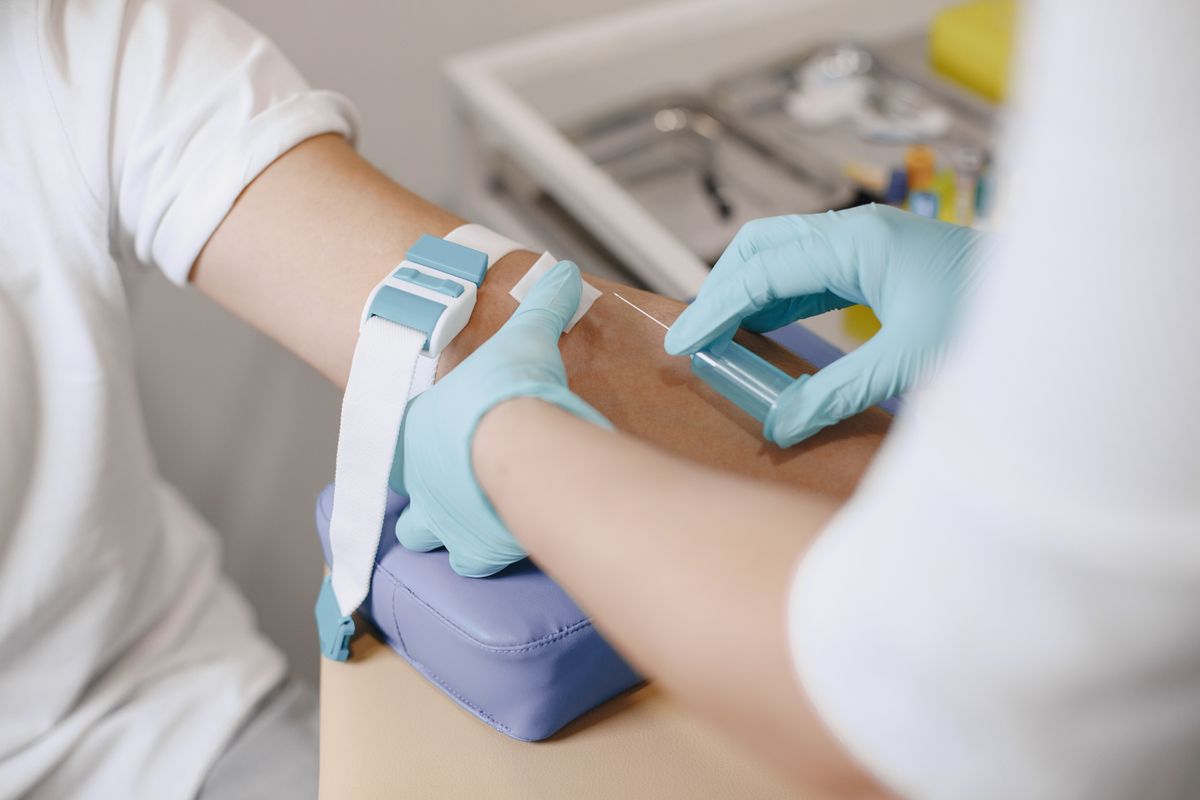
MCV stands for mean corpuscular volume. It is simply the average size of your red blood cells. A low MCV means those cells are smaller than they should be. Doctors call that state microcytosis.
It happens because the cells are short of the material they need to fill themselves. In practice that almost always means either not enough iron, or an inherited difference in how hemoglobin is made.
Most labs use a normal range of roughly 80 to 100 femtoliters. Femtoliters are written fL, and the same number is sometimes written as µm³. Ranges vary, so read your result against the range printed on your own report.
Why small cells happen#
Hemoglobin is the pigment that carries oxygen. It is the bulk of what fills a red blood cell. If the bone marrow cannot make enough hemoglobin, it divides the cells one extra time. That gives more cells, each smaller and paler.
That is why small cells and a low hemoglobin so often travel together. It is also why a low MCV can show up before the hemoglobin has fallen at all.
The two causes that matter most#
Iron deficiency is the most common cause worldwide. It comes from blood loss, from too little iron in the diet, or from poor absorption. In women who have periods, heavy periods are the usual reason. In men, and in women past menopause, slow bleeding from the gut has to be taken seriously.
Thalassemia trait is an inherited difference in how hemoglobin is made. It is common in people of Mediterranean, Middle Eastern, South Asian, Southeast Asian and African heritage. The trait itself causes no symptoms and needs no treatment. But it is worth naming, for two reasons. It saves years of needless iron. And it matters when planning a family.
Less often, long-standing inflammation, lead exposure and some rarer marrow conditions produce small cells.
| Finding | Iron deficiency | Thalassemia trait |
|---|---|---|
| Ferritin | Low | Normal or high |
| Red cell count | Usually low | Often normal or high |
| Response to iron | Improves | No change |
What happens next#
Ferritin is the single most useful follow-up test, because it reflects your iron stores. One catch matters. Ferritin rises with inflammation. So a normal ferritin next to a high CRP does not fully rule out iron deficiency. A doctor may add transferrin saturation.
If ferritin is low, the question shifts from what to how. In adults, iron deficiency is a finding that needs an explanation, not just a supplement. That depends on your age, sex and symptoms. It may mean celiac testing, a stool test for hidden blood, or referral for endoscopy.
What is reasonable to do#
Do not start high-dose iron on your own and keep taking it. Too much iron is harmful, above all for people with thalassemia trait or hemochromatosis.
Better dietary iron is sensible for everyone. Iron from meat and fish is absorbed best. Plant sources are absorbed better alongside vitamin C, and away from tea and coffee.
The wider picture#
The in-depth guide to iron deficiency anemia covers the full test sequence. It also covers how long treatment takes to work. And it explains why ferritin matters more than hemoglobin alone.
Should this go to a doctor?
Three honest answers, a plain answer back.
Only after a blood test
If a blood test shows low ferritin, iron tablets rebuild your stores over three to six months. Do not self-dose without the test: in men and women past menopause, low iron needs its cause found first, because it can signal hidden bleeding.
Buying through this link supports the free library with a small commission. It never changes a pick.
Have your own result?
Send the report. A doctor explains every value in writing within 3 days.
Look up another result
A result is rarely the only one on the page. Each of these gives the bands, in both unit systems, and what happens next.
- Fasting triglyceride result4 bands
- Ferritin result6 bands
- HbA1c8 bands
- HDL result6 bands
- Health age result6 bands
- How late is late?6 bands
- How long it usually lasts, by cause5 bands
- How to tell how dehydrated you are5 bands
- Is this a fever?8 bands
- LDL result5 bands
- Median grip strength after 50, by age and sex8 bands
- Morning readings, and what to do with them6 bands
- Platelet count6 bands
- Potassium result6 bands
Common questions
My MCV is low but hemoglobin is normal. Does that matter?
How do doctors tell iron deficiency from thalassemia trait?
Why does my doctor want to investigate rather than just prescribe iron?
People also ask
Not what you were looking for?
Say what you came for and we will take you there.