What Does a Low HDL Mean?
A doctor explains what low HDL cholesterol means, why it causes no symptoms, what each HDL value signals, and what actually raises it and by how much.

See a doctor promptly if
- Chest pain, jaw or arm pain, or breathlessness on exertion, which needs assessment whatever your cholesterol shows
- Low HDL with high triglycerides and a raised HbA1c, a pattern that needs a full risk assessment
- Triglycerides above 500 mg/dL (5.6 mmol/L), which risks pancreatitis and needs prompt review
- A heart attack or stroke in a parent or sibling before age 55 in men or 65 in women
- An HDL under 20 mg/dL (0.5 mmol/L), which is unusual and deserves a proper explanation
- New leg pain on walking that stops with rest, which can signal narrowed leg arteries
What your HDL result means
| Result | In short | What it means |
|---|---|---|
| Under 40 mg/dL (1.0 mmol/L) in men | Low | Below the threshold most guidelines use for men. It carries no symptoms, which is why it is only ever found on a blood test. |
| Under 50 mg/dL (1.3 mmol/L) in women | Low | Women sit naturally higher, so the line is drawn higher. Below it counts as low even though the same figure would be borderline in a man. |
| 40 to 59 mg/dL (1.0 to 1.5 mmol/L) | Acceptable | The band most adults fall in. Not a problem on its own, and read alongside LDL, triglycerides and blood pressure rather than by itself. |
| 60 mg/dL (1.5 mmol/L) and above | Favourable | Traditionally treated as protective. Very high levels, above about 90 mg/dL or 2.3 mmol/L, are not better still and are worth mentioning to a doctor. |
| Total divided by HDL under 3.5 | Good | The ratio tracks risk better than HDL alone. Under 3.5 is where you want it. |
| Total divided by HDL above 5 | Act on it | Worth a proper conversation about the whole picture: weight, activity, smoking, alcohol, and whether treatment is warranted. |
One result is a snapshot. Ranges differ a little between labs, and what a number means depends on the rest of you. Check it against the guidelines.
The short version
- Low HDL cholesterol causes no symptoms at all. Nothing you feel comes from it. It is only ever found on a blood test.
- Low is under 40 mg/dL (1.0 mmol/L) in men and under 50 mg/dL (1.3 mmol/L) in women.
- HDL is a marker of metabolic health more than a cause of disease. It usually travels with high triglycerides and insulin resistance.
- Medicines that raise HDL have not cut heart attacks. So doctors treat what a low HDL points at, not the number itself.
Work out what your cholesterol meansneeds a lab result, free, nothing to install
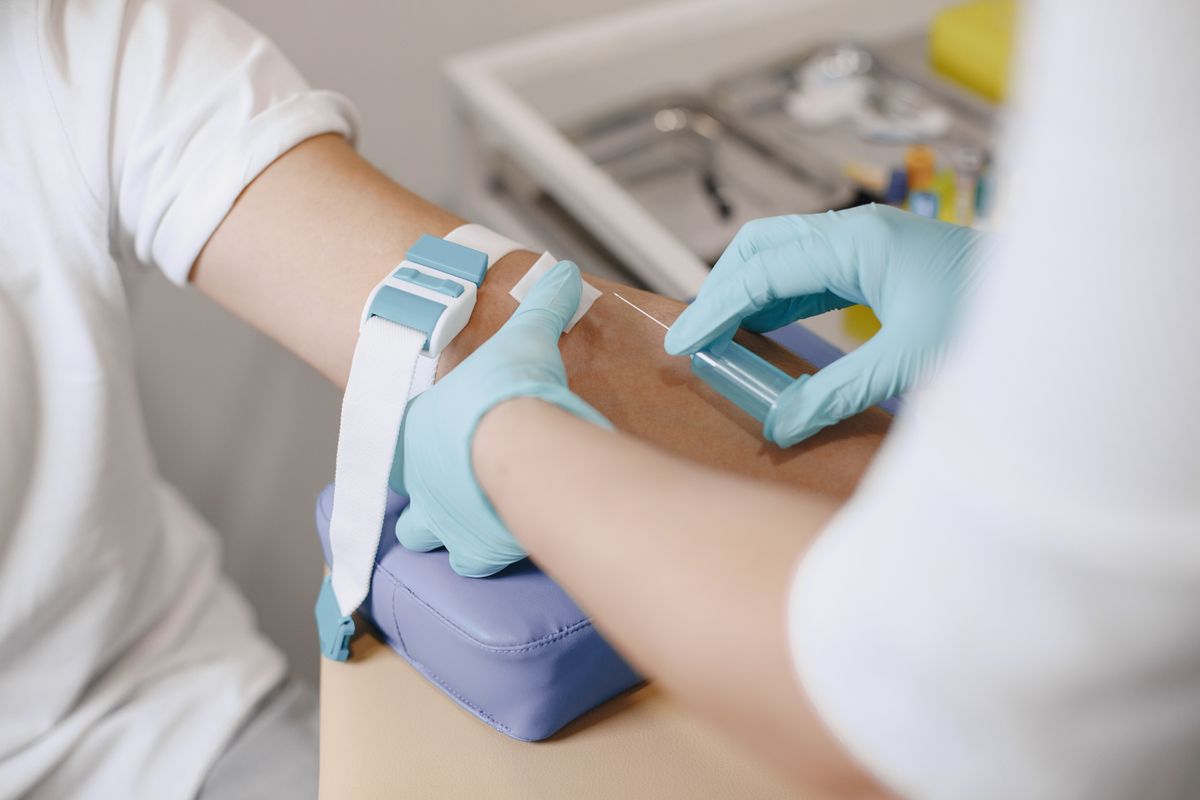
HDL is the particle that collects cholesterol from tissues, including artery walls, and returns it to the liver. A low HDL means less of that transport capacity. In large population studies a low HDL goes with a higher risk of heart attack and stroke.
Most people who look this up have one question first. What will I feel? The honest answer deserves to come before anything else.
Low HDL causes no symptoms#
Low HDL cholesterol produces no symptoms at all. There is no ache, no tiredness, no headache, no dizziness and no sensation in the chest that comes from a low HDL.
This is worth saying plainly because so many people search for symptoms and find lists that are really symptoms of something else. Cholesterol does not irritate a nerve or stretch an organ. It does its damage silently, over decades, inside artery walls.
So if you feel unwell and your HDL is low, the two facts are almost certainly separate. Tiredness, breathlessness, aching legs and chest tightness all deserve their own explanation. Do not let a cholesterol result absorb a symptom that needs looking at.
The only situation where you feel anything is when the arteries have already narrowed. That shows up as chest pressure on exertion, or calf pain on walking that eases with rest. Those are symptoms of established disease, not of a number on a lipid panel.
What counts as low, value by value#
Most laboratories set the threshold at under 40 mg/dL (1.0 mmol/L) for men and under 50 mg/dL (1.3 mmol/L) for women. To convert mg/dL to mmol/L, divide by 38.7.
| HDL, mg/dL | HDL, mmol/L | What it generally means |
|---|---|---|
| Under 20 | Under 0.5 | Unusually low. Suggests a genetic cause, very high triglycerides, or a drug effect. Deserves a specific explanation |
| 20 to 29 | 0.5 to 0.75 | Clearly low in anyone. Usually sits with high triglycerides and insulin resistance |
| 30 to 39 | 0.75 to 1.0 | Low for men and for women. The most common band people find flagged |
| 40 to 49 | 1.0 to 1.3 | Within range for men. Still counted as low for women |
| 50 to 59 | 1.3 to 1.55 | Within range for both men and women |
| 60 to 89 | 1.55 to 2.3 | Traditionally regarded as favorable |
| 90 and above | 2.3 and above | Very high. No extra benefit, and possibly no protection at all |
Two cautions about that table. Reference ranges vary between laboratories, so read your own report's range. And a single result is a snapshot. Illness, recent weight change and pregnancy all shift lipids, so one low value is not a diagnosis.
Why HDL is low, in order of how common#
Inherited baseline. Genetics sets a large share of where your HDL sits. Some people eat well, exercise and still run at 35 mg/dL (0.9 mmol/L). This is the single biggest reason for a low HDL in an otherwise healthy person.
Insulin resistance and central weight. This is the most common modifiable cause. Fat carried around the abdomen drives high triglycerides, and high triglycerides pull HDL down through a direct exchange between the particles. That is why the two almost always move together.
Physical inactivity. Aerobic activity raises HDL modestly. A sedentary pattern lets it drift down.
Smoking. Tobacco lowers HDL and damages the artery wall at the same time.
Type 2 diabetes, especially when blood sugar runs high. The lipid pattern of diabetes is low HDL, high triglycerides and small dense LDL particles.
Medicines. Anabolic steroids can crash HDL dramatically. Certain older beta blockers, some progestins and some retinoids lower it more mildly. Never stop a prescribed medicine to test this. Take the list to your doctor.
Very low fat diets. Cutting fat hard, especially while eating a lot of refined carbohydrate, lowers HDL.
Less common causes. Untreated thyroid disease, chronic liver or kidney disease, and rare inherited disorders of HDL metabolism.
Low HDL when everything else is normal#
This is one of the most common situations people bring to a doctor, and it is reassuring more often than not.
An isolated low HDL means a low HDL alongside a normal LDL, normal triglycerides, normal blood pressure and normal blood sugar. In that setting the extra risk is modest. In many people it is largely inherited, and in some families it is clearly so.
An isolated low HDL is not treated with a medicine. There is no drug that lowers your risk by raising HDL, which is covered further down. What it does is nudge the rest of the assessment. Your doctor will want a full risk estimate, a blood pressure reading, an HbA1c and a family history rather than a repeat lipid panel every three months.
The pattern that changes the conversation is low HDL with high triglycerides. That combination usually means insulin resistance, which is worth naming and acting on. Our guide to lowering triglycerides and the one on metabolic syndrome both apply directly.
The ratio tells you more than HDL alone#
Because HDL and LDL interact, most clinicians read the total cholesterol to HDL ratio or the non-HDL cholesterol figure rather than HDL by itself.
Non-HDL cholesterol is total cholesterol minus HDL. It captures every particle that contributes to plaque in one number, which makes it more useful than LDL alone. A total to HDL ratio under about 4 is generally regarded as reasonable.
Someone with an LDL of 110 mg/dL (2.8 mmol/L) and an HDL of 35 mg/dL (0.9 mmol/L) is in a different position from someone with the same LDL and an HDL of 65 mg/dL (1.7 mmol/L). The LDL line looks identical on both reports. The risk is not.
If you want to see how your own numbers combine, the cholesterol calculator does the arithmetic. Our guide to a high LDL explains the other half of the panel.
What actually raises HDL, and by roughly how much#
These figures are averages from trials and population studies. Individual responses vary widely, and inherited baseline limits how far anyone can move.
| Change | Typical effect on HDL | Notes |
|---|---|---|
| Stopping smoking | Up 4 to 6 mg/dL (0.1 to 0.15 mmol/L) | The most reliable single change. Appears over weeks to months |
| Regular aerobic exercise | Up 2 to 5 mg/dL (0.05 to 0.13 mmol/L) | Needs sustained months, not weeks. Around 150 minutes a week |
| Losing excess weight | About 1 mg/dL per 6 to 7 lb (3 kg) lost | Shows once weight is stable, not during active dieting |
| Replacing refined carbohydrate with unsaturated fat | Up 2 to 5 mg/dL (0.05 to 0.13 mmol/L) | Olive oil, nuts, oily fish and avocado in place of sugar and white flour |
| Better blood sugar control in diabetes | Up a few mg/dL | Comes mainly through falling triglycerides |
| Alcohol | Up, dose related | Real effect, but not recommended. The harms outweigh it |
| Anabolic steroids | Down sharply | A common and reversible cause of very low HDL in gym users |
Why no drug targets HDL#
This is the part that surprises people, and it explains why your doctor may seem uninterested in the number.
Niacin raises HDL substantially. Large trials added it to statin treatment and found no reduction in heart attacks or strokes, with added side effects. A class of drugs called CETP inhibitors raised HDL even further, sometimes doubling it. Most failed to reduce cardiovascular events, and one increased deaths.
Genetic studies point the same way. People born with gene variants that give them naturally higher HDL do not have fewer heart attacks than expected.
The conclusion is that HDL is a passenger rather than the driver. It reports on the metabolic state of the person carrying it. Change the state and the number follows. Change the number alone and nothing happens.
That is why attention goes to LDL, blood pressure, blood sugar, smoking and weight instead. Our guide to cholesterol and heart risk explains how those combine into an overall estimate.
What a doctor does next#
A low HDL on its own rarely leads to more blood tests. It leads to a wider look at risk.
- Repeat the lipid panel if the first was taken during illness, or shortly after a big weight change.
- Check triglycerides carefully, since they drive most of the interpretation.
- Measure blood pressure properly, ideally with readings taken at home.
- Check HbA1c for prediabetes or diabetes.
- Check thyroid, kidney and liver function if there is any reason to suspect them.
- Ask about family history of early heart attack or stroke.
- Run a cardiovascular risk estimate that combines age, sex, blood pressure, smoking and the lipid panel.
Treatment decisions come from that overall estimate, not from the HDL line. If a statin is discussed, it is because of the total risk picture. Our guide to statins covers what they do and what they do not.
What the number cannot tell you#
An HDL value does not tell you whether you already have narrowed arteries. It cannot say when, or whether, you will have a heart attack. It does not measure how well your HDL particles actually work, which varies between people and is not tested in routine practice.
It also cannot be read alone. A low HDL in a fit 30 year old with normal everything else means something different from the same value in a 62 year old smoker with high blood pressure.
And it says nothing about how you feel today. That is the point worth repeating.
What I see most often in clinic#
Three patterns come up again and again.
The first is the person who arrives frightened by a low HDL and leaves relieved, because everything else was normal and the risk estimate was low. That conversation takes five minutes and is worth having properly.
The second is the person who has been sold a supplement to raise HDL. Nothing on that shelf has been shown to reduce heart attacks. The money would do more good spent on shoes for walking.
The third is the young man with an HDL of 22 mg/dL (0.6 mmol/L) and no explanation offered. Asking about anabolic steroid use, kindly and without judgment, usually gets an honest answer. That number recovers when the steroids stop.
I also see the reverse mistake. Someone reports crushing chest pain on the stairs, and the appointment gets spent on cholesterol. Symptoms come first. Numbers wait.
At work#
Shift work makes this pattern harder. Rotating nights are linked to lower HDL, higher triglycerides and more central weight gain, partly through disrupted sleep and partly through what is available to eat at 3am.
If you work shifts, the practical levers are the same ones but harder to reach. Bring food rather than relying on a vending machine. Protect a consistent sleep window on days off. Keep some activity on rest days rather than saving it all for one heavy session.
Workplace health screening often flags a low HDL and stops there. It is reasonable to ask what your triglycerides, blood pressure and HbA1c were on the same panel, since those decide what the HDL actually means.
When this needs a doctor#
Book a routine appointment for any of these:
- A low HDL you have not had explained, especially with high triglycerides.
- A low HDL alongside a raised blood pressure, a raised HbA1c or a rising waist measurement.
- An HDL under 20 mg/dL (0.5 mmol/L) at any age.
- A family history of heart attack or stroke before age 55 in men or 65 in women.
- Any lipid result you are being asked to take a medicine for and do not understand.
Get seen the same day for triglycerides above 500 mg/dL (5.6 mmol/L), because of the risk of pancreatitis.
Call emergency services for chest pain or pressure lasting more than a few minutes, pain spreading to the jaw or arm, sudden breathlessness, or sudden weakness in the face, arm or leg. None of that waits for a cholesterol discussion.
The bottom line#
Low HDL cholesterol causes no symptoms, and that is the answer most people are looking for. The cut-offs are 40 mg/dL (1.0 mmol/L) for men and 50 mg/dL (1.3 mmol/L) for women, and anything below counts as low. The number matters most as a marker of the metabolic company it keeps, which is why triglycerides, blood sugar and blood pressure are the results to look at next.
Medicines that raise HDL have not reduced heart attacks, so the useful work is stopping smoking, moving more, and shifting weight from around the middle. A low HDL with everything else normal is worth noticing and not worth losing sleep over.
Check your cholesterol ratio now
Two numbers from your lipid panel, in mg/dL.
Unglamorous and well proven
Daily psyllium helps constipation, modestly lowers cholesterol, and steadies blood sugar after meals. Start small and drink water with it.
Buying through this link supports the free library with a small commission. It never changes a pick.
Have your own result?
Send the report. A doctor explains every value in writing within 3 days.
Look up another result
A result is rarely the only one on the page. Each of these gives the bands, in both unit systems, and what happens next.
- Health age result6 bands
- How late is late?6 bands
- How long it usually lasts, by cause5 bands
- How to tell how dehydrated you are5 bands
- Is this a fever?8 bands
- LDL result5 bands
- MCV number3 bands
- Median grip strength after 50, by age and sex8 bands
- Morning readings, and what to do with them6 bands
- Platelet count6 bands
- Potassium result6 bands
- Prolactin result6 bands
- PSA result7 bands
- Reading after a meal5 bands
Common questions
What are the symptoms of low HDL cholesterol?
Why is my HDL low?
My HDL is low but everything else is normal. Does it matter?
Why is low HDL cholesterol bad?
How can I raise my HDL naturally?
Is HDL really good cholesterol?
Does alcohol raise HDL, and should I drink for that reason?
Not what you were looking for?
Say what you came for and we will take you there.