What Does a High ESR Mean?
A doctor explains what the ESR test measures, why age and anemia raise it, how it differs from CRP, and which high results actually need investigating.

See a doctor promptly if
- New headache, scalp tenderness, jaw pain on chewing or visual change with a high ESR, over the age of 50
- A high ESR with weight loss, night sweats or persistent fever
- A high ESR with new bone pain, especially in the back
- An ESR above 100 mm/hour, which should never be left without an explanation
- A high ESR with a hot, swollen, painful joint, or with fever after recent dental or surgical work
- A high ESR with breathlessness, coughing blood, or a cough lasting more than three weeks
What your ESR result means
| Result | In short | What it means |
|---|---|---|
| Under 20 mm/hr | Normal | The usual ceiling is roughly your age divided by two for a man, and age plus ten divided by two for a woman, so normal rises with age. |
| 20 to 40 mm/hr | Mildly raised | Common and often unremarkable. Any recent infection, injury, pregnancy, anaemia or obesity lifts it. ESR says inflammation is present somewhere, never what or where. |
| 41 to 70 mm/hr | Clearly raised | Worth explaining. Usually looked at alongside CRP, a blood count and your symptoms rather than acted on alone. |
| 71 to 100 mm/hr | Needs assessment | Markedly raised. At this level a doctor works through infection, inflammatory joint disease and, in the over 50s, polymyalgia rheumatica and giant cell arteritis. |
| Above 100 mm/hr | See a doctor | Strongly associated with a significant underlying cause: serious infection, an inflammatory condition or a blood disorder. This is investigated, not repeated and watched. |
| Raised ESR with a new headache after 50 | Urgent | New temple headache, scalp tenderness, jaw ache on chewing or any visual change with a high ESR is treated as giant cell arteritis until proven otherwise. Same day. |
One result is a snapshot. Ranges differ a little between labs, and what a number means depends on the rest of you. Check it against the guidelines.
The short version
- ESR measures how fast red blood cells settle in a tube in one hour. They settle faster when inflammatory proteins are present. So a high ESR is an indirect sign of inflammation.
- It is a slow, non-specific marker that rises and falls over weeks. It is also raised by age, anemia, pregnancy, kidney disease and simply being female.
- A mildly high ESR in someone who feels well usually needs a repeat rather than a scan. A very high ESR, above about 100 mm/hour, always needs an explanation.
- The ESR never names a disease. Your symptoms, your blood count and your examination decide what happens next.
Try the result lookupone number, free, nothing to installType the number you are holding and it lands in a band, with what usually happens next.
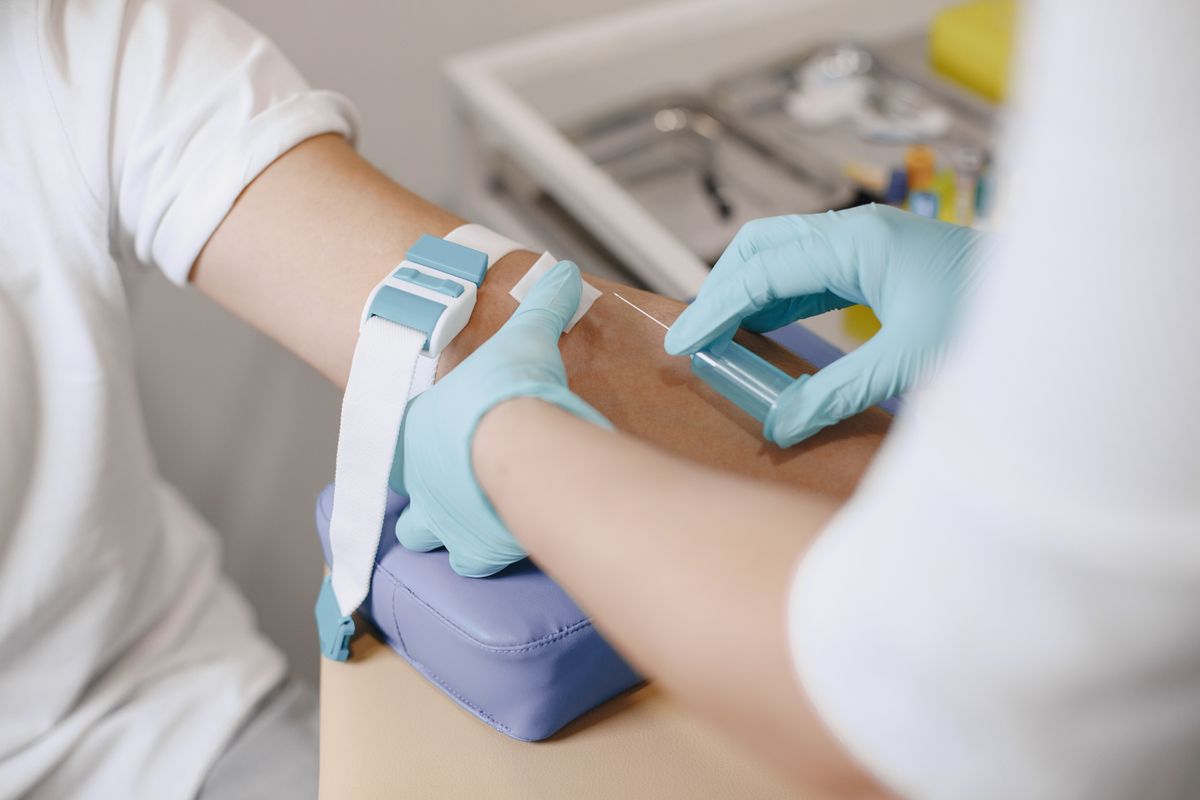
ESR, the erythrocyte sedimentation rate, measures how far your red blood cells fall down a thin tube in one hour. When inflammatory proteins are present, red cells stack together and sink faster. So a high ESR is an indirect sign of inflammation somewhere in the body. It tells you that something may be going on. It never tells you what or where.
It is also one of the easiest tests to over-interpret, because several completely benign things raise it. What follows is the number you were given, what it does and does not suggest, and what usually happens next.
What the test actually measures#
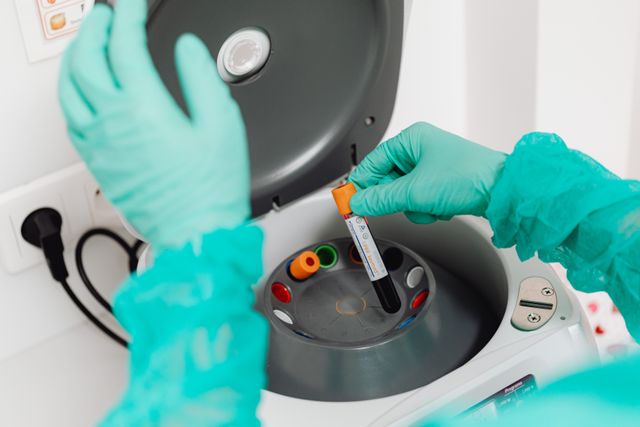
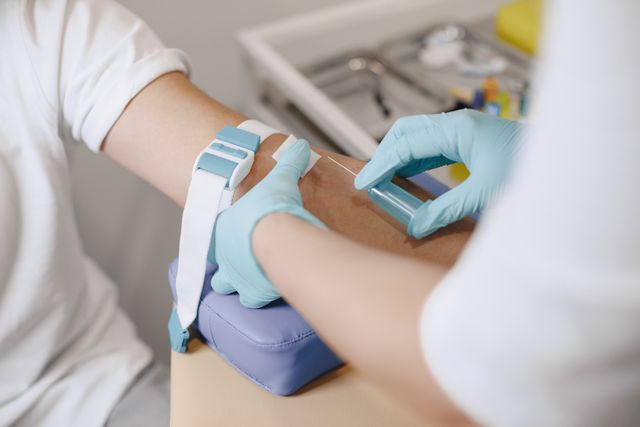
Blood is placed in a narrow vertical tube and left for exactly one hour. The result is how many millimeters of clear plasma appear at the top, written as mm/hour.
Red cells normally repel each other and fall slowly. Inflammation raises proteins in the plasma, mainly fibrinogen and immunoglobulins. These proteins reduce the repelling charge, so red cells stack into rolls, like coins on their side. Heavier stacks fall faster.
That is the whole mechanism, and it explains the test's two great weaknesses. Anything that changes plasma proteins moves the number, disease or not. And anything that changes the number of red cells does too, because fewer cells fall with less crowding.
There is no single normal number#
ESR rises with age, and it is naturally higher in women. A practical rule sets the upper limit at age divided by two for men, in millimeters per hour. For women it is age plus ten, divided by two.
| Group | Usual upper limit | Age rule |
|---|---|---|
| Men under 50 | About 15 mm/hour | Age divided by 2 |
| Men 50 and over | About 20 mm/hour | Age divided by 2 |
| Women under 50 | About 20 mm/hour | Age plus 10, divided by 2 |
| Women 50 and over | About 30 mm/hour | Age plus 10, divided by 2 |
Two reasons sit behind the difference. Women have slightly fewer red cells and a higher fibrinogen level than men, both of which speed settling. And with age, fibrinogen and immunoglobulins drift upward while mild anemia becomes more common.
By that guide, an ESR of 30 in a woman of 70 is expected. The same 30 in a man of 22 deserves a second look. Your report's printed range may not account for this, which is one reason results get flagged unnecessarily. Our guide to why lab reference ranges differ explains why two labs can call the same result normal and abnormal.
Your number, band by band#
Read this against the age rule above, not on its own.
| ESR result | How to read it | What usually follows |
|---|---|---|
| Under 20 mm/hour | Normal for almost every adult | Nothing |
| 20 to 30 mm/hour | Normal in older women, mildly raised in young men | Often nothing, or a repeat with a blood count |
| 30 to 50 mm/hour | Mildly to moderately raised. Benign causes still lead | CRP, full blood count, kidney and liver tests, repeat in 4 to 8 weeks |
| 50 to 70 mm/hour | Moderately raised. Less likely to be age or weight alone | Same tests, plus a careful history and examination for a source |
| 70 to 100 mm/hour | Markedly raised. Usually reflects something real | Prompt review, wider testing, imaging if no source is obvious |
| Above 100 mm/hour | Strongly abnormal and uncommon | Needs an explanation, not a repeat. Often infection, autoimmune disease, myeloma or cancer |
What raises it, most common first#
Ranked by how often each explains a raised ESR in general practice:
- Anemia. The single biggest non-inflammatory cause. Fewer red cells settle faster, whatever else is happening. Our guide to iron deficiency covers the usual reason.
- Age, sex and body weight. Older age, being female, pregnancy and obesity all lift it without disease.
- Ordinary infections. Chest, urine, skin, dental and viral infections.
The ESR often stays up for weeks after you feel better. 4. Kidney disease and high cholesterol. Both change plasma proteins enough to move the number. 5. Inflammatory joint and muscle conditions. Rheumatoid arthritis, polymyalgia rheumatica, lupus and other autoimmune disease. 6. Tissue injury. Recent surgery, a fracture, a burn or a heart attack. 7. Long-running infections. Bone infection, an abscess, tuberculosis, or infection on a heart valve. 8. Blood and solid cancers. Myeloma, lymphoma, and some kidney and bowel cancers. These are the least common, and they seldom appear as a raised ESR alone.
Some things push the ESR falsely low and can hide real inflammation. A very high white cell count, polycythemia, sickle cell disease, severe liver disease and a delayed or shaken sample all do this. A normal ESR never rules inflammation out.
ESR against CRP#
| ESR | CRP | |
|---|---|---|
| Rises in | Days | 6 to 12 hours |
| Falls in | Weeks | Days |
| Affected by anemia and age | Yes | No |
| Best used for | Slow, chronic conditions | Acute illness, tracking treatment |
They are complementary rather than duplicates. A high ESR with a normal CRP often points towards a chronic or autoimmune process, or towards one of the non-inflammatory causes above. A high CRP with a normal ESR usually means something that started in the last day or two.
What a high ESR cannot tell you#
Be clear about the limits before you read anything into the number.
- It cannot name a disease, or point to an organ.
- It cannot separate infection from autoimmune disease from cancer.
- It cannot grade how severe an illness is. Mild conditions produce high numbers and serious ones produce normal numbers.
- It cannot be read without your hemoglobin. Anemia alone explains many raised results.
- It cannot exclude anything. A normal ESR in someone with worrying symptoms changes very little.
The ESR is a prompt to look, not a finding in itself.
What a doctor does next#
For a mild rise in someone who feels well, the standard approach is settled. A full blood count, CRP, kidney and liver tests, a urine dipstick, and a repeat ESR in four to eight weeks. Most have settled by then, which is exactly why repeating a blood test is often the right move rather than a scan.
If symptoms exist, they direct everything. Aching and stiffness in the shoulders and hips in an older adult points towards polymyalgia rheumatica far more than the number does. Joint swelling leads to autoimmune blood tests. A cough leads to a chest x-ray. Back pain with a very high ESR leads to tests for myeloma, including protein studies in blood and urine.
When the ESR is high, symptoms are present and no source is obvious, imaging follows. That usually means a chest x-ray first, then scans guided by whatever the history suggests.
When a high ESR needs attention now#
Two situations stand out. The first is a very high ESR, above roughly 100 mm/hour. That is uncommon, and usually reflects serious infection, active autoimmune disease or cancer. That figure earns a proper search rather than a repeat.
The second is anyone over 50 with a raised ESR and a new headache. Add temple tenderness, jaw pain on chewing, or any change in vision. That combination suggests giant cell arteritis, which can threaten sight and is treated as a same-day problem.
Get medical advice promptly, rather than waiting for a repeat test, if a raised ESR comes with any of these:
- Weight loss, drenching night sweats, or a fever lasting more than a week.
- New bone or back pain, or a hot swollen joint.
- Coughing blood, or breathlessness that is new.
At work#
ESR still appears on many pre-employment and health surveillance panels, and it causes more trouble there than anywhere else.
A fit worker with no symptoms gets a result of 28 mm/hour and the whole file stops. In practice the sensible order is the same as in clinic. Check the hemoglobin, apply the age and sex rule, ask about symptoms, repeat in four to eight weeks. Fitness for a job should rest on what the person can do, not on one line of a lab report. Our guide to pre-employment medicals covers what these panels are really for.
Two work settings do change the reading. Heavy dust exposure, especially silica, and contact with tuberculosis both cause long-running inflammation that can lift the ESR for months. In those workers a persistently raised result deserves a chest x-ray rather than reassurance.
Shift and manual workers are also more likely to be anemic and to carry extra weight. Both raise the number without disease.
What I see most often#
The commonest scenario by far is a raised ESR found on a panel ordered for something else. The person feels fine. The number is 32. Their hemoglobin is at the low end, they are 62 years old, and eight weeks later the ESR is 19.
The second is the opposite mistake. Someone has clear symptoms, the ESR comes back at 14, and the normal result gets used as proof that nothing is wrong. It is not proof of anything.
The third is the number that should never be shrugged off: a result over 100 in someone with back pain, tiredness or weight loss. That one gets a full workup the same week, every time.
The bigger picture#
ESR is one line among many, and it is close to meaningless without your blood count and how you actually feel. The wider guide to understanding your blood test results explains how these markers are read together rather than one at a time.
The bottom line#
A high ESR means red cells are settling faster than usual, which points to inflammation without naming it. Age, sex, anemia, pregnancy, kidney disease and extra weight explain a large share of raised results in people who feel well.
Read your number against the age rule, not the printed range, and always alongside a CRP and a blood count. A mild rise usually earns a repeat in four to eight weeks. A result above 100 mm/hour, or any raised result with weight loss, fever, new bone pain or headache over 50, needs an explanation now.
Should this go to a doctor?
Three honest answers, a plain answer back.
On more than two daily medicines
A weekly organizer prevents the double-dose and missed-dose mistakes every doctor sees. The simplest ones work best, filled once a week at the same time.
Buying through this link supports the free library with a small commission. It never changes a pick.
Have your own result?
Send the report. A doctor explains every value in writing within 3 days.
Look up another result
A result is rarely the only one on the page. Each of these gives the bands, in both unit systems, and what happens next.
- Uric acid result5 bands
- Vitamin D result6 bands
- What actually happens, and how often6 bands
- What actually has evidence behind it6 bands
- What counts as a good VO2 max, by age and sex12 bands
- What counts as normal, and what does not5 bands
- What each code and line on a hospital bill8 bands
- What each thyroid antibody6 bands
- What glucose on a urine dipstick5 bands
- What is worth doing, and how often6 bands
- What melatonin does, at what dose6 bands
- What tends to be behind it6 bands
- What tends to be driving them6 bands
- What the coating looks like, and what it usually is6 bands
Common questions
What is a normal ESR?
What does a high ESR mean?
What are the most common reasons for a high ESR?
Is a high ESR dangerous?
How is ESR different from CRP?
Is an ESR of 30, 40, 50 or 70 high?
Can a high ESR be normal for me?
People also ask
Not what you were looking for?
Say what you came for and we will take you there.