The Mediterranean Diet: Why Doctors Keep Recommending It
A doctor explains the Mediterranean diet: what it actually is, the trial evidence behind it, what a day of eating looks like, and how to start cheaply.

See a doctor promptly if
- Sudden unexplained weight loss is never a diet success. That pattern needs a doctor
- Any version sold with banned foods, required supplements or a subscription is marketing wearing the name
- If you take diabetes or blood thinning medicines, tell your doctor before changing how you eat
- New chest pressure or jaw and arm pain on exertion needs urgent care, whatever you are eating
The short version
- It is the only popular diet tested in a large randomized trial on heart attacks and strokes.
- The pattern is plants, beans, whole grains, olive oil and fish. Meat and sweets are occasional.
- It is cheap at its core. Beans, lentils, oats, frozen vegetables and canned fish carry the whole pattern.
- Nothing is banned and nothing is weighed. That is why people are still following it years later.
See your own numbers2 min, free, nothing to installProtein in grams for your weight, and a week built round what you already eat.

Every few years a new diet arrives with a book tour and a villain food. The Mediterranean pattern outlasts them for one reason. It is the only one that walked into a large randomized trial measuring heart attacks and came out with the result standing. Here is what it actually is, what the trials showed, and how to run it on a small budget.
What the pattern actually is#
Strip away the styling and it is a set of ratios.
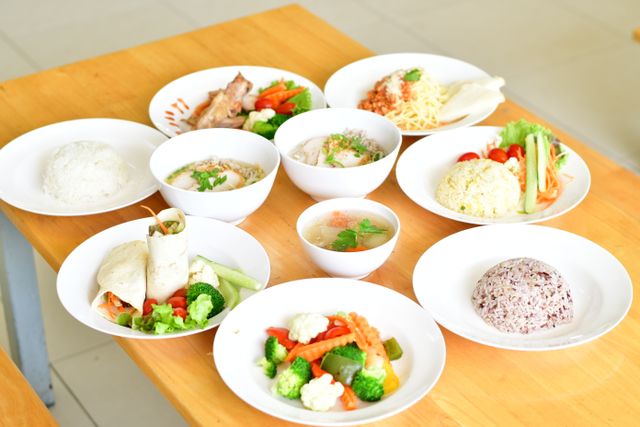
- Every day: vegetables at most meals, fruit, whole grains, beans or lentils, nuts, and olive oil as the default fat.
- Most weeks: fish about twice, eggs and poultry in moderation, plain yogurt and modest amounts of cheese.
- Occasionally: red meat, processed meat, sweets, and refined snack foods.
- Around the food: meals eaten as meals, often with other people, rather than grazed from a packet.
Nothing is weighed. Nothing is forbidden. The trials that tested it gave people one simple addition each. One group added about 4 tablespoons (60 mL) of olive oil a day. The other added about 1 ounce (30 g) of nuts a day. The rest was guidance, not rules.
The postcard version and the real one#
The version sold online is a photograph: a white terrace, a bowl of glossy olives, a whole grilled fish, a glass of wine at sunset. That version is expensive and hard to live in.
The real pattern is closer to lentil soup with bread, beans and rice with a big salad, or sardines on toast. It is peasant food. Historically it was cheap because it had to be, built on what stored well and grew locally.
Two corrections worth making. Wine is not part of the recommendation. The evidence has moved away from suggesting alcohol to anyone who does not already drink. And olive oil is a large part of the pattern, not a garnish. In the trials, people used it for cooking, dressing and dipping, which is why the daily amount was measured.
What the trials showed#
The main trial randomized about 7,400 adults at high cardiovascular risk. One group followed the pattern with added olive oil, one with added nuts, and one was advised to eat a low fat diet. After roughly five years, the two Mediterranean groups had about 30 percent fewer heart attacks, strokes and cardiovascular deaths.
Two honest caveats belong with that figure. The trial had randomization problems at some sites and was republished after reanalysis, with the main conclusion intact but its confidence trimmed. And a 30 percent relative reduction in a high risk group is a smaller absolute number than it sounds. It works out to roughly one major event avoided for every 200 such people over five years.
The same trial found about 30 percent fewer new cases of type 2 diabetes. A later trial pairing the pattern with calorie reduction and activity showed better weight and waist outcomes than advice alone. An older trial in people who had already had a heart attack found substantially fewer repeat events.
Around the trials sit decades of observational studies linking the pattern to lower rates of type 2 diabetes, cognitive decline, and early death. Observational data cannot prove cause, but it points the same direction as the trials, which is the combination that makes doctors comfortable.
Why a pattern beats a list of superfoods#
Superfood lists sell well because they promise a small purchase instead of a change. Blueberries, turmeric, chia, green powder. Each has a study behind it, usually small and usually measuring a blood marker rather than an outcome.
The problem is arithmetic. Adding one food to an otherwise unchanged week changes very little. The Mediterranean evidence comes from the whole plate shifting: more fiber, more unsaturated fat, less refined starch, less processed meat, fewer ultra processed foods. Those changes act together, and no single ingredient carries them.
Fiber is a good example of why the pattern works when a supplement does not. Beans, whole grains, vegetables and nuts push most people from a typical 15 grams of fiber a day to 30 grams or more. That shift changes cholesterol, blood sugar and the gut at once. Our guide to fiber and gut health covers what that does.
Doing it cheaply#
This is the objection I hear most, and it is fair. The showcase version is expensive. The pattern is not.
| The expensive version | The version that works |
|---|---|
| Small bottles of specialty olive oil | The largest bottle of olive oil you can afford, or a plain liquid plant oil where olive is out of reach |
| Fresh salmon or sea bass | Canned sardines, mackerel, salmon or tuna |
| Pine nuts and pistachios | Peanuts, sunflower seeds, pumpkin seeds |
| Fresh out of season vegetables | Frozen vegetables, picked ripe and often cheaper than fresh |
| Quinoa and specialty grains | Oats, barley, brown rice, whole wheat pasta |
| Fresh herbs | Dried herbs, garlic, onion, lemon, vinegar |
| Imported cheeses | Plain yogurt, plus a small amount of strong cheese for flavor |
| Prepared bean salads | Dried beans and lentils, cooked in a batch |
Dried lentils need no soaking and cook in about 20 minutes. A large pot of bean and vegetable soup costs less per serving than almost any packaged meal, and it freezes.
Adapting it to the food you already eat#
The most common mistake is treating this as a cuisine to switch to. It is not. It is a set of ratios that fits inside almost any way of cooking.
If you eat rice most days, keep the rice and add lentils and a vegetable beside it. If your family eats stew, use half the meat and add a can of beans. If lunch is a sandwich, keep the sandwich and double the salad in it. If you cook with butter or a solid fat, swap the cooking fat and leave everything else alone.
This matters practically. Diets fail at month nine, not week one, and the biology of regain is universal, which our guide to why diets fail explains. A pattern that uses your own food, your own cooking and your own shops has nothing to fall off. A wedding, a bad week, a holiday: all of it fits, so Monday needs no restart.
Shopping honestly helps too. Plenty of packaged foods carry the name on the box while being mostly refined starch and salt. The nutrition label guide is the check. If you want the pattern turned into actual meals and a calorie target, the free diet plan builder does that.
What it does not do#
Overselling is how good advice gets discredited, so here are the limits.
It does not replace medicines. People on cholesterol or blood pressure treatment who improve their eating still usually need the treatment. The two work together, and our guide to cholesterol and heart risk explains why both matter.
It is not a weight loss program. Without some reduction in overall calories, weight usually holds steady. That is not a failure of the pattern. It was never designed as a slimming plan.
It does not cure type 2 diabetes, although it improves blood sugar control and may prevent new cases. It does not detoxify anything. It does not undo smoking, untreated sleep apnea or heavy drinking.
And the trial benefit was measured in high risk adults. A healthy 30 year old following it is doing something sensible, but the size of the payoff is unknown for them.
What I see in clinic#
The people who succeed with this almost never announce a diet. They change three things and keep them.
The pattern I watch for is the opposite. Someone overhauls everything on a Sunday, buys unfamiliar ingredients, cooks two elaborate meals, and is back to normal within three weeks. The failure was not willpower. It was the size of the change.
The other thing I see is cost anxiety doing real harm. People decide they cannot afford to eat well and stop trying. Dried lentils, oats, frozen peas, eggs and canned fish are usually among the cheapest items in the store.
At work#
Workplace eating is where most patterns break. Canteen food skews toward refined starch, fried protein and very little vegetable, and shift work makes cooking harder at both ends of the day.
Two things carry most of the benefit. Bring one component rather than a whole meal. A container of beans, a bag of nuts, a piece of fruit. Let it upgrade whatever the canteen serves. And batch cook once a week rather than daily, since a pot of soup or beans reheats at any hour.
Night shift workers face an extra problem. The body handles a heavy meal at 3am poorly. Smaller portions across the shift, with the largest meal before it starts, tends to sit better.
What to ask a doctor#
- "I take medicines for diabetes or blood pressure. Should we watch anything as I change how I eat?"
- "I have kidney disease. Are beans, nuts and salt substitutes safe for me?"
- "I am on a blood thinner. Does more green vegetable matter for my monitoring?"
- "Would you recheck my cholesterol and blood sugar in three to six months?"
- "Is there any reason this pattern is not right for my situation?"
What the evidence cannot tell us#
We cannot say which parts of the pattern do the work. The olive oil, the nuts, the fiber, the reduced processed meat and the shared meals all changed at once. Nobody has separated them, and probably nobody can.
Trials also test advice, not eating. Participants reported what they ate, and self reported food data is imperfect in every study ever run.
We do not know whether the same benefit appears in people at low baseline risk. Trial groups were not representative of everyone.
And long term data for children, pregnancy and advanced kidney disease is thin. Those situations deserve individual advice rather than a general pattern.
When to see a doctor#
Book an appointment before making a large change if you take medicines for diabetes, take a blood thinner, or have kidney disease. Doses sometimes need to follow the food.
Get seen if you lose weight without trying, lose your appetite for more than two weeks, or develop new digestive symptoms that persist. A new eating pattern can be blamed for a problem that has nothing to do with it.
Seek emergency care for chest pressure, jaw or arm pain, or sudden weakness in the face or on one side. Those are heart and stroke symptoms, and no diet changes what to do about them.
The bottom line#
The Mediterranean pattern earns its reputation because someone tested it properly and it held up. It is plants, beans, whole grains, olive oil and fish, with meat and sweets kept occasional, and it is cheap at its core. It will not replace your medicines or create weight loss on its own. What it does well is continue, and a pattern that continues beats a plan that impresses.
Should this go to a doctor?
Three honest answers, a plain answer back.
If you are buying a meter
Any major-brand glucose meter is accurate enough for home tracking. The real cost is the strips, so compare strip prices before choosing the meter.
Buying through this link supports the free library with a small commission. It never changes a pick.
Want this built around you?
A doctor and a certified coach write a diet and fitness plan checked against your conditions and medicines.
Common questions
What do you actually eat on a Mediterranean diet?
What proof is there that it works?
Is the Mediterranean diet expensive?
Do I have to use extra virgin olive oil?
Is the Mediterranean diet good for weight loss?
Mediterranean or keto: which is better?
Can I follow it if I do not like fish or olives?
Not what you were looking for?
Say what you came for and we will take you there.