What to Do During a Panic Attack
A doctor explains what helps during a panic attack, why the symptoms feel so physical, and why new chest pain must be checked before blaming anxiety.

See a doctor promptly if
- New or unfamiliar chest pain, especially crushing or spreading to the arm, jaw or back, or with sweating and nausea: call emergency services
- New palpitations, fainting, or breathlessness that has not been medically assessed before
- Panic attacks starting for the first time after the age of forty, or with weight loss, tremor or a persistently fast pulse
- Any thoughts of harming yourself. Contact your local emergency number or crisis line now
The short version
- Slow your breathing out rather than in, put both feet on the floor, and let the wave pass. Panic attacks peak within about ten minutes and end on their own, even if you do nothing.
- The symptoms are real physical events driven by adrenaline, not imagination. Knowing that is part of what makes them less frightening the next time.
- When symptoms are new, panic is a diagnosis of exclusion. A doctor should assess first-time chest pain, palpitations or breathlessness before anyone calls it anxiety.
Try two minutes of guided breathing2 min, free, nothing to installNot a treatment for anything. It is the one thing on this site that does something in the next two minutes.
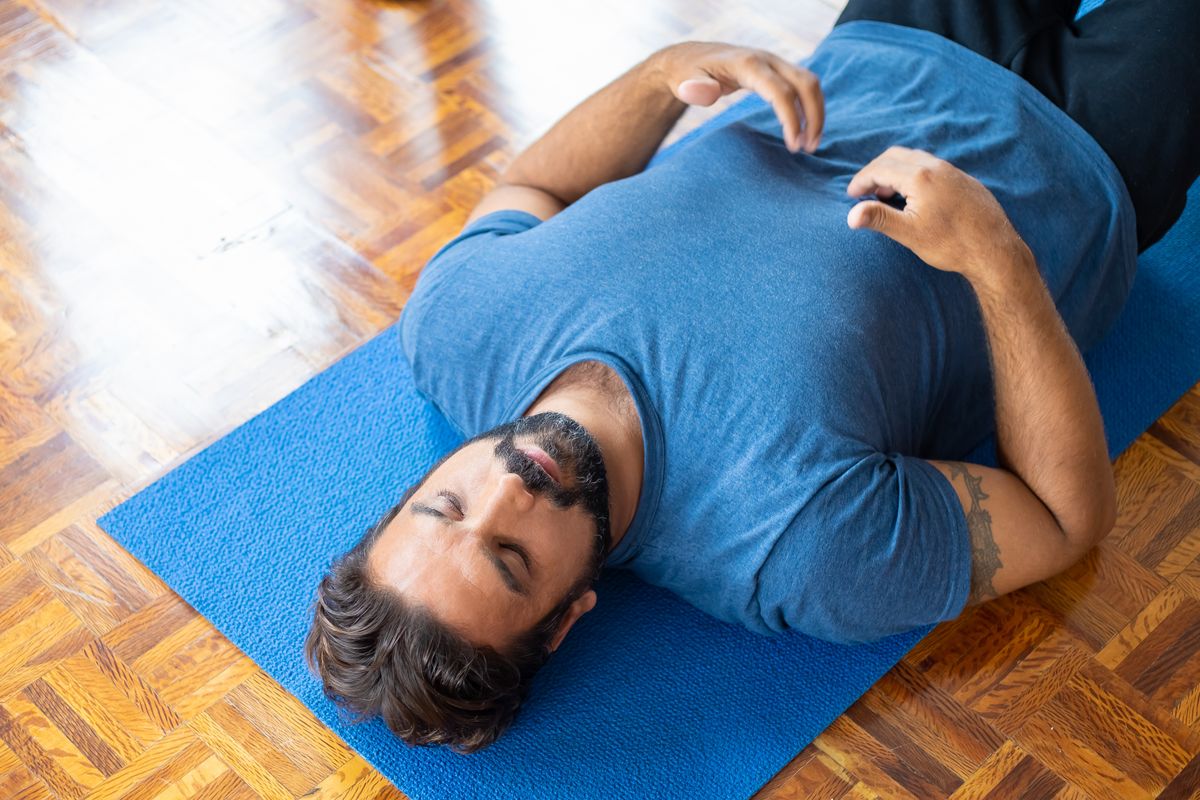
In the moment, the most useful things are simple: sit or stand somewhere you feel steady, put both feet on the floor, and slow your out-breath so that breathing out takes longer than breathing in. Panic attacks build to a peak within about ten minutes and then subside on their own, so the aim is not to stop the wave but to stay with it until it passes.
What is happening in your body#
A panic attack is a full adrenaline response arriving without a threat to justify it. Adrenaline speeds the heart, opens the airways, redirects blood to large muscles and sharpens the senses. That produces a pounding chest, breathlessness, sweating, trembling, nausea, cold or tingling hands and a feeling of unreality.
Over-breathing explains several of the strangest symptoms. Breathing fast lowers carbon dioxide in the blood, which causes tingling around the mouth and in the fingers, dizziness, chest tightness and a sense of not getting enough air, even though oxygen levels are normal. The feeling of suffocating during a panic attack is caused by breathing too much, not too little. That single fact reframes the whole experience for many people.
What actually helps in the moment#
Lengthen the out-breath. Breathing in for a count of about four and out for about six, through the nose if you can, gently reverses the over-breathing. Do not force deep breaths. Slow matters more than deep.
Ground yourself in the room. Name what you can see, feel the chair or floor, hold something cold. This gives the mind a task that competes with catastrophic thinking.
Do not run. Leaving the shop or the meeting brings instant relief and teaches your brain that escape was necessary, which makes the next attack more likely in the same setting. Where you safely can, stay until the wave subsides.
Tell yourself something accurate rather than something soothing. "This is adrenaline, it peaks in ten minutes, it has always passed" works better than "calm down", which nobody has ever found helpful.
Afterwards#
You will feel drained, shaky and often embarrassed. That is normal and passes over a few hours. Note what preceded it. Poor sleep, alcohol, a lot of caffeine, a stressful conversation, or nothing identifiable at all.
If attacks recur, effective treatment exists and works well. Cognitive behavioral therapy for panic has strong evidence and usually runs over a handful of sessions. Medication is an option to discuss with your own doctor. Cutting back caffeine, treating poor sleep, and reducing alcohol all lower the baseline. A thyroid check is a standard part of assessing new panic symptoms, because an overactive thyroid mimics them closely.
Where to take this next#
The fuller guide to the physical symptoms of anxiety explains why anxiety produces chest, gut and neurological symptoms so convincingly, and how doctors separate them from the conditions they imitate.
Sixty seconds of calm, right now
Box breathing: in 4, hold 4, out 4, hold 4. Follow the circle.
Before you buy anything for sleep
No gadget fixes sleep apnea. But if your score above suggests a sleep study, a simple pulse oximeter can give your doctor useful overnight numbers for under $30.
Buying through this link supports the free library with a small commission. It never changes a pick.
Something on your mind?
A psychiatrist answers one question privately, in writing, within 24 hours. Or talk it through on a 20 minute video call.
Common questions
How do I know it is panic and not my heart?
Does breathing into a paper bag help?
Can a panic attack actually harm me?
People also ask
Not what you were looking for?
Say what you came for and we will take you there.