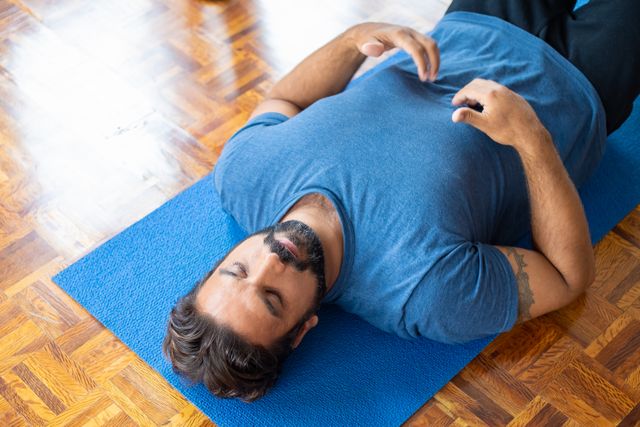
Are Heart Palpitations Serious? And Why They Are Worse at Night
A doctor explains what heart palpitations are, why they are felt most at night and on the left side, the harmless triggers, and the patterns that need checking.

See a doctor promptly if
- Palpitations with fainting, near fainting, or blacking out for a moment
- Palpitations with chest pain, pressure, or breathlessness at rest
- A racing heart that starts during exercise rather than while resting
- A fast or irregular heartbeat that lasts more than 30 minutes and will not settle
- A close relative who died suddenly and unexpectedly before the age of 50
- Palpitations in someone with known heart failure, a previous heart attack, or a weak heart muscle
The short version
- Most palpitations are extra beats, or a normal heart reacting to caffeine, stress, alcohol or poor sleep.
- They feel worst at night because lying still removes competing noise and brings the heart nearer the chest wall.
- The company they keep decides how serious they are. Fainting, chest pain and breathlessness change the picture.
- An ECG plus thyroid and blood count tests settle most cases. A wearable monitor catches the rest.
Check your resting pulse30 seconds, free, nothing to install

Most palpitations are not serious. The large majority are extra beats, which nearly everyone has. The rest are a normal heart beating faster after caffeine, stress, alcohol, poor sleep or a fever.
What decides whether they need investigating is not how alarming they feel at 1am. It is the company they keep.
What a palpitation actually is#
A palpitation is simply being aware of your own heartbeat. That awareness comes in three shapes, and telling them apart matters more than anything else here.
The single thud. An extra beat arrives early. Because it comes too soon, the heart has not filled, so that beat is weak and often not felt at all. The heart then pauses, and the next beat lands on an over-full chamber. The sensation people call a skipped beat is usually the strong beat after the pause, not the missing beat.
The sustained fast rhythm. The heart runs at 150 beats a minute or more, starts and stops abruptly, and lasts minutes to hours. This pattern is more likely to be a real rhythm disturbance and is worth capturing on a trace.
The normal heart working hard. Sinus tachycardia is your own pacemaker speeding up correctly, because of fever, exercise, fear, blood loss, pain or dehydration. It builds and fades gradually rather than switching on and off.
Why they are worse at night#
Night does not create palpitations. It removes everything that was hiding them.
- Nothing competes. No traffic, no conversation, no task. A signal that lost all day now wins.
- The pillow conducts. Your ear on a pillow picks up the beat through bone and mattress.
- The heart moves closer. Lying on the left side tilts the heart toward the chest wall, so each beat lands against the ribs. This is the single commonest reason people report palpitations only on that side.
- The vagus nerve is dominant. At rest the slowing nerve takes over, the underlying rate drops, and extra beats become easier to feel against a slow background.
- The day arrives late. Alcohol, a large late meal, an evening coffee and a stressful day all reach the heart around bedtime.
The common and harmless triggers#
These raise adrenaline or lower the threshold for extra beats.
- Caffeine, especially energy drinks and pre workout powders.
- Alcohol, which is a large and underestimated trigger, often the following day.
- Nicotine and vaping.
- Poor sleep and a broken night shift.
- Dehydration, a missed meal, or a low blood sugar dip.
- Fever and any acute infection.
- Hard exercise, and the recovery hour afterwards.
- Stress, anxiety and the alert state after an argument or bad news.
- Pregnancy, which raises blood volume and heart rate normally.
The causes that point at something#
A smaller group of causes need a name and a treatment.
An overactive thyroid. Too much thyroid hormone drives a fast, forceful heart, often with weight loss, heat intolerance, tremor and anxiety. One blood test finds it, and our guide to thyroid test results explains the numbers.
Anemia and low iron. Fewer red cells means the heart pumps faster to deliver the same oxygen. Palpitations with breathlessness on stairs, tiredness and pallor fit this. Low iron can cause symptoms before anemia appears, so ferritin belongs in the panel. Our guide to iron deficiency covers what the results mean.
Dehydration and salt shifts. Heat, heavy sweating, vomiting, diarrhea and water tablets can drop potassium or magnesium. Low levels make extra beats more likely.
Medicines and products. Decongestants containing pseudoephedrine, some asthma inhalers, thyroid tablets, some antidepressants, weight loss and bodybuilding supplements, and high dose steroid courses all speed the heart. Herbal stimulants are a frequent hidden source.
Atrial fibrillation. This is an irregular, chaotic rhythm that becomes common after 65. It can feel like a fluttering bag rather than a beat, or cause no symptoms at all. It matters because it raises stroke risk and has specific treatment.
Structural heart problems. A valve problem, a weak heart muscle or scarring from a previous heart attack can cause palpitations. These almost always bring breathlessness, swelling or reduced exercise tolerance with them.
Do not stop an inhaler, a thyroid tablet or any prescribed medicine to test one of these ideas. Take the full list, including supplements, to your prescriber and ask about it.
How to describe them usefully#
Doctors make most of the diagnosis from your description. Five details do the heavy lifting.
| What to say | Why it matters |
|---|---|
| Tap the rhythm on the desk | Shows regular versus chaotic better than any word |
| Sudden on and sudden off, or gradual | Abrupt start and stop suggests a true fast rhythm |
| How fast, in beats per minute | Count your pulse for 30 seconds and double it |
| How long it lasts | Seconds points to extra beats, 20 minutes or more points elsewhere |
| What you were doing | At rest, in bed, or during exercise changes the risk |
| What else you felt | Fainting, chest pain and breathlessness are the ones that matter |
What a doctor does next#
The first appointment is usually simple. Pulse, blood pressure, listening to the heart, and a resting ECG. That tracing takes a few minutes and shows the rhythm at that moment.
Blood tests follow: full blood count, thyroid function, electrolytes, kidney function, and often ferritin and blood sugar.
The hard part is that palpitations rarely happen while you are being examined. That is what monitors are for.
| Monitor | How long it records | Best for |
|---|---|---|
| Resting ECG | About 10 seconds | Symptoms happening right now, plus baseline rhythm |
| Holter monitor | 24 to 48 hours | Symptoms that happen most days |
| Patch or wearable monitor | 1 to 2 weeks | Symptoms a few times a week |
| Event recorder | Several weeks, you press a button | Occasional but repeated episodes |
| Implantable loop recorder | Up to a few years | Rare episodes with fainting, placed under the skin |
An echocardiogram, an ultrasound scan of the heart, is added if the examination or ECG is abnormal, or if there is breathlessness. An exercise test is used when symptoms come on with exertion.
Smartwatch traces are not a diagnosis on their own. They are still useful. Save the recording, note the time, and bring it to the appointment.
What palpitations cannot tell you#
The sensation itself is a poor guide to risk, and this is worth saying plainly.
A terrifying thump in bed is usually an ordinary extra beat. A dangerous rhythm can feel like almost nothing, or show up only as tiredness. Atrial fibrillation is silent in a large share of people who have it.
Palpitations also cannot tell you your heart rate, whether the rhythm is regular, or how long an episode really lasted. People routinely report an hour when the trace shows four minutes. That is why a recording beats a description, and why a normal ECG on a symptom-free day does not close the question.
The patterns that are not harmless#
Take these seriously rather than waiting them out.
- Palpitations with fainting or near fainting.
- Palpitations with chest pain, pressure, or breathlessness at rest.
- A racing heart that begins during exertion rather than at rest.
- A fast or irregular beat lasting more than 30 minutes.
- Palpitations in someone with known heart disease or a weak heart muscle.
- A family history of sudden unexplained death before 50, or of an inherited heart condition.
What actually helps#
For the common, benign version, these steps do most of the work.
- Move caffeine to the morning only for two weeks, then judge. Count tea, cola and energy drinks too, as our caffeine guide sets out.
- Cut alcohol for two weeks. The effect is often on the next day, not the same night.
- Drink enough water, especially in heat or after exercise.
- Eat regularly. Long gaps and low blood sugar bring on extra beats.
- Protect sleep. Broken sleep raises adrenaline all day.
- Treat anxiety if it is part of the picture. That reduces both frequency and how much you notice.
- Try slow breathing during an episode. Six breaths a minute for two minutes settles many of them.
Reassurance works better than people expect. Once someone knows the ECG and blood tests are normal, the same beats stop being frightening and become background.
At work#
Two occupational patterns come up often.
Heat and dehydration are the first. Working hot, sweating heavily and drinking too little concentrates the blood and shifts salts. Palpitations in the late afternoon of a hot shift are usually about fluids, not the heart. Regular drinks and proper breaks fix more of these than any tablet.
Night shifts are the second. Broken sleep, heavy caffeine and energy drinks stack up. People on rotating rosters describe palpitations mainly on their sleep-deprived days.
Safety-critical roles need a different threshold. If you drive commercially, work at height, or operate heavy machinery, report any palpitations with lightheadedness. Tell occupational health before the next shift. That is not an overreaction. A brief loss of awareness in those settings has consequences.
What I see most often in clinic#
Three things repeat.
The first is a person who has been aware of their heartbeat for two weeks after a single frightening episode. The beats are normal. The attention is the new part. A normal ECG plus a clear explanation usually ends it.
The second is the missed thyroid. Palpitations plus weight loss and heat intolerance, put down to stress for six months, when one blood test would have answered it.
The third is alcohol. People connect a heavy weekend with Saturday, not with Monday. The extra beats often arrive a day later, so the link gets missed.
I also see the opposite. Someone with an irregular pulse decides it is anxiety and does not come in. Atrial fibrillation deserves a diagnosis, because untreated it raises stroke risk, and that risk is very reducible.
When to see a doctor#
Book a routine appointment for any of these:
- Palpitations that are new, or that have changed in pattern.
- An irregular pulse you can feel at the wrist.
- Palpitations with tiredness, breathlessness on stairs, weight loss or tremor.
- Palpitations that started after a new medicine or supplement.
- Episodes frequent enough to disturb sleep or daily life.
Get urgent care for palpitations with fainting, chest pain, breathlessness at rest, or a fast beat that will not settle after 30 minutes.
The bottom line#
Most palpitations are extra beats or a normal heart responding to caffeine, alcohol, stress or a poor night. They are loudest at night because you are still and the room is quiet. Lying on your left also brings the heart against the chest wall. The features that change the picture are fainting, chest pain, breathlessness, exertion as the trigger, and a family history of sudden death. An ECG, a blood count and a thyroid test answer most of the question, and a wearable monitor answers the rest.
Check your heart rate right here
Find your pulse at the wrist, then tap the button with every beat.
If you are buying a thermometer
A basic digital stick thermometer is accurate and costs a few dollars. Forehead scanners are fine for quick checks on children; ear thermometers need good technique to read true.
Buying through this link supports the free library with a small commission. It never changes a pick.
A question about your own situation?
One question, answered personally by a doctor in writing within 24 hours.
Common questions
Why do I get heart palpitations at night?
Why are palpitations worse when I lie on my left side?
Are heart palpitations serious?
Can anxiety alone cause palpitations?
How do I describe palpitations to my doctor?
What blood tests are done for palpitations?
Is it normal to feel my heartbeat in my chest, neck or ears?
People also ask
Not what you were looking for?
Say what you came for and we will take you there.