Exercise With High Blood Pressure: What Actually Lowers the Number
A doctor explains how much exercise lowers blood pressure, why lifting weights is safe, the breath holding mistake, and the symptoms that mean stop now.

See a doctor promptly if
- Chest pain, tightness or pressure during or just after exercise
- Breathlessness far beyond what the effort should cause
- Fainting, near fainting, or sudden severe dizziness while training
- A resting reading of 180/120 mmHg or higher, with or without symptoms
- A sudden severe headache, blurred vision, or one sided weakness
- A very irregular or racing heartbeat that does not settle with rest
The short version
- Regular aerobic exercise lowers the top number by about 5 to 8 mmHg. Most of that arrives within 8 to 12 weeks.
- Lifting weights is safe for almost everyone with high readings. The old warning was based on breath holding, not on lifting itself.
- Isometric holds such as wall sits have surprisingly strong evidence. They take about 12 minutes, three days a week.
- Do not measure your pressure straight after training. Wait at least 30 minutes, or the reading means nothing.
Check your blood pressure1 min, free, nothing to install

Almost everyone with a high reading is told to exercise. Almost nobody is told how much it helps, or which kind helps most. Nobody explains the jump on the monitor after a workout. Those details decide whether the habit sticks.
How much exercise actually moves the number#
In people with high readings, regular aerobic exercise lowers the top number by about 5 to 8 mmHg. The bottom number falls by about 3 to 5 mmHg. That is close to what one low dose tablet does.
The timing matters as much as the size.
- Within one session. Pressure drops for several hours after you finish. This effect can last up to 24 hours. It is why daily movement beats three hard sessions a week.
- By 4 weeks. Average readings start to shift if you train most days.
- By 8 to 12 weeks. Most of the benefit is in place.
- After stopping. The gain fades within one to two weeks. This is a rented benefit, not a bought one.
The standard target is 150 minutes of moderate activity a week, or 75 minutes of vigorous activity, plus two sessions of resistance work. Moderate means you can talk but not sing. Brisk walking counts.
Aerobic work and resistance work do different jobs#
Both lower pressure. They do it through different routes, and combining them beats either alone.
Aerobic exercise works mainly on the blood vessels. The lining of the artery learns to release more nitric oxide, a molecule that relaxes the vessel wall. Wider vessels mean less resistance and a lower reading.
Resistance training works partly the same way, and partly by changing body composition and insulin sensitivity. More muscle means better blood sugar handling, which matters because insulin resistance and high pressure usually travel together.
| Type | Typical drop in systolic | What a week looks like | Notes |
|---|---|---|---|
| Aerobic, moderate | 5 to 8 mmHg | 30 minutes most days, brisk walking or cycling | Strongest and best studied effect |
| Resistance, dynamic | 3 to 5 mmHg | 2 or 3 sessions, 8 to 10 exercises | Safe when you keep breathing |
| Isometric holds | Around 8 mmHg | 3 days a week, about 12 minutes | Small trials, large effect |
| Combined | 6 to 10 mmHg | Walking most days, weights twice | What most guidelines now suggest |
That table is not a ranking. Isometric trials are smaller and shorter. Aerobic exercise stays the foundation because it also improves heart function, weight, sleep and mood. Our guide to lowering blood pressure without medicine covers the diet side that runs alongside it.
The resistance training fear, and where it came from#
For decades people with high readings were told to avoid weights. That advice has been reversed, and it is worth knowing why.
Blood pressure does rise sharply during a heavy lift. Readings taken inside the artery during maximal effort can reach very high numbers for a few seconds. Those measurements frightened everyone.
Two things were missed. The spike is brief and it ends the moment the set ends. And most of the spike comes from breath holding, not from the muscle work.
Trials since then show the opposite of the old fear. Regular moderate resistance training lowers resting blood pressure. It does not raise it. Major heart organizations now include it in standard advice for high readings.
The sensible limits are simple. Use a weight you could lift 10 to 15 times, not one you could lift twice. Stop each set short of failure, rest between sets, and build load over months. Our strength training pages cover technique.
The breath holding problem#
This is the single most useful thing on this page.
When you hold your breath and strain, pressure builds inside the chest. Doctors call it the Valsalva maneuver. It happens during a heavy lift, a hard push on the toilet, or a gritted teeth final repetition.
Pressure inside the chest rises. Blood return to the heart falls. Then, the moment you release, blood pressure rebounds sharply upward. That rebound is the risky part, and it is also why people feel lightheaded after a hard set.
Common signs of breath holding: a red face, bulging neck veins, a grunt at the top of the lift, and dizziness afterward.
Isometric exercise, the surprising one#
An isometric hold means pushing against something that does not move. Nothing shortens, nothing lifts. A wall sit is the plain example.
The evidence has surprised many doctors. Pooled trials of isometric training show systolic falls of roughly 8 mmHg. Handgrip squeezing on a spring device gives similar results.
The usual protocol is short. Four holds of two minutes, with one to four minutes of rest between, three days a week. Total working time is eight minutes.
Two cautions keep it safe.
- Keep breathing normally throughout. An isometric hold with breath holding is a different and less safe thing.
- Ask your doctor first if you have heart disease, an aneurysm, or readings above 180/110 mmHg. The trials excluded those groups.
The trials are smaller and shorter than the aerobic ones, so treat this as a useful addition rather than a replacement for walking.
Reading the monitor around exercise#
Blood pressure is meant to rise during exercise. The heart is pushing more blood with each beat. A systolic reading of 160 to 200 mmHg during hard effort is an ordinary response, not a warning.
The bottom number should stay flat or fall slightly. A diastolic number that climbs steeply is worth mentioning to a doctor.
Do not measure at home within 30 minutes of exercising, a hot shower, coffee or a cigarette. All four distort the result. People frighten themselves with post workout readings that were never meant to be taken.
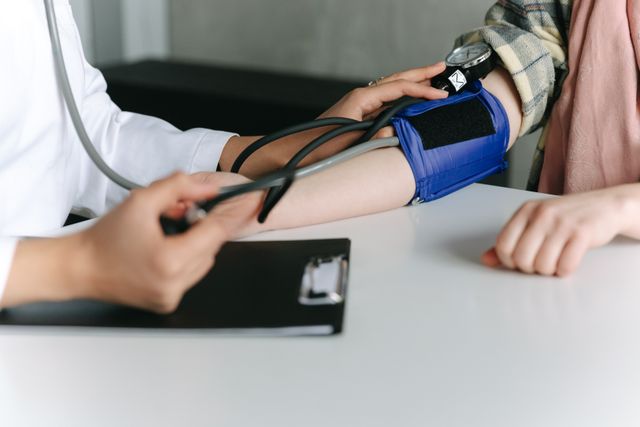
For an accurate home reading, sit still for five minutes, feet flat, arm at heart level. Take two or three readings a minute apart and average them. A blood pressure log helps your doctor more than any single number. If readings are only high at the clinic, white coat hypertension explains why.
Medicines that change the rules#
Some blood pressure medicines change how your body behaves during exercise. None of this is a reason to skip a dose. It is a reason to train differently.
Beta blockers slow the heart at rest and during effort. Your watch will show a heart rate 20 to 30 beats lower than expected for the same work. Chasing a target heart rate zone is then pointless, and pushing to hit it is unsafe. Judge effort by breathing instead, using the talk test. Our page on heart rate during exercise explains the zones and where they break down.
Diuretics, often called water tablets, increase fluid and salt loss. In hot weather or hot workplaces that adds to dehydration risk, and can lower potassium. Cramps, weakness and dizziness are the signals. Drink to thirst, train in cooler parts of the day, and raise any cramping with your doctor.
Some other medicines cause a sharp drop in pressure when you stop suddenly. Cool down by walking for five minutes rather than sitting straight down.
Anyone taking these should read our overview of blood pressure medicines. Never adjust a prescription to make training easier. Ask for a review instead.
What I see in clinic#
Three patterns repeat.
The first is the person who took their reading straight after a spin class, saw 178, and stopped exercising. That reading was doing its job. Theirs was a measurement problem, not a heart problem.
The second is the man in his sixties who was told twenty years ago never to lift anything heavy. He has lost muscle he did not need to lose. Muscle protects against falls, frailty and diabetes.
The third is the person on a beta blocker who feels like a failure. Their heart rate will not reach the zone on the screen. The medicine is doing its job.
At work#
Physical work is not the same as exercise, though it counts for something. Work brings long static holds, awkward lifts and no control over pace.
Lifting in a rush is where breath holding happens most. The same rule applies at the loading bay as in the gym. Breathe out on the effort.
Heat is the bigger workplace issue. A diuretic plus a hot environment raises the risk of dehydration. Our pages on heat and hydration at work cover the practical detail.
On night rotations, expect readings to run higher. Show your doctor the pattern rather than one alarming number.
When to ask a doctor before starting#
Most adults with mildly raised readings can start walking today without clearance. Ask first if any of these apply.
- Resting pressure of 180/110 mmHg or higher.
- Known heart disease, heart failure, or a previous heart attack or stroke.
- Chest pain, unusual breathlessness or blackouts with effort.
- A heart valve problem, an aneurysm, or an irregular rhythm being investigated.
- Diabetes with eye or kidney complications.
- Long inactivity plus a plan to start something vigorous.
Stop and get help#
Stop and seek medical help for chest pain or tightness during effort. The same applies to breathlessness far beyond what the work should cause. Fainting or near fainting needs assessment, as does a sudden severe headache, blurred vision or one sided weakness. A racing or very irregular heartbeat that will not settle needs same day review.
Stop the session for milder warnings too: unusual dizziness, cold sweating, or nausea with effort. Rest, and mention it at your next appointment.
The bottom line#
Exercise lowers blood pressure by about as much as a first line tablet, and the effect shows within weeks. Aerobic work is the foundation, resistance work is safe and helpful, and isometric holds like wall sits punch above their weight. The main technical mistake is breath holding during effort, so breathe out as you push. Measure your pressure at rest, at least 30 minutes after training, and take any chest pain or fainting seriously rather than pushing on.
Check a blood pressure reading now
Type the two numbers from your monitor.
If you are buying a monitor
Get an upper-arm cuff, not a wrist one, from a validated brand like Omron. Expect $30 to $60. Check the cuff size fits your arm; a too-small cuff reads high.
Buying through this link supports the free library with a small commission. It never changes a pick.
Have your own result?
Send the report. A doctor explains every value in writing within 3 days.
Common questions
How much does exercise lower blood pressure?
Is lifting weights safe if I have high blood pressure?
Why is my blood pressure high right after exercise?
Do wall sits really lower blood pressure?
Why does my heart rate stay low on beta blockers?
Should I stop my walk if my blood pressure is high that morning?
How long until exercise starts working on my readings?
People also ask
Not what you were looking for?
Say what you came for and we will take you there.