Fatty Liver Disease, Explained Without Panic
A doctor explains what fatty liver means on a scan, how serious it is, what the fibrosis question really is, and the changes that reverse it.

See a doctor promptly if
- Yellowing of the eyes or skin, dark urine, pale stools, or new confusion and drowsiness: seek medical care promptly
- Vomiting blood, black tarry stools, or a swollen abdomen with leg swelling: seek emergency care
- Liver enzymes several times the upper limit of normal, or a platelet count that is falling on repeat tests
The short version
- Fatty liver means fat has built up in liver cells. On its own it is common, often silent, and largely reversible with weight loss and less alcohol.
- The question that matters is not whether there is fat. It is whether there is scarring. That is checked with simple scores such as FIB-4 or a fibrosis scan, rather than ultrasound alone.
- Losing about 7 to 10 percent of body weight clears fat and can reverse early scarring. No supplement has been shown to do this.
Try the waist-to-height ratio1 min, free, nothing to installFat around the middle is what drives this, and the ratio tracks it in people whose weight reads normal.

Fatty liver means exactly what it says: fat has built up inside liver cells, usually found by accident on an ultrasound or hinted at by mildly raised liver enzymes. On its own, in most people, it is not dangerous. It is common, silent, and substantially reversible.
The part that deserves attention is not the fat but the scarring. A minority of people move from simple fat to inflammation and then to fibrosis, and fibrosis stage is what predicts whether the liver will cause problems decades from now. Assessing that is straightforward, and it is the conversation to have with your doctor.
Why the names keep changing#
You may see NAFLD, NASH, MASLD or MASH. International bodies have moved from "non-alcoholic fatty liver disease" to "metabolic dysfunction-associated steatotic liver disease" because defining a condition by what it is not was unhelpful, and because the metabolic driver is the point. The underlying condition is the same one your doctor has always meant.
What causes it#
Insulin resistance sits at the center. When muscle and fat cells respond poorly to insulin, the liver receives a surplus of fatty acids and sugar and converts them into stored fat. This is why fatty liver travels with a large waist, type 2 diabetes, raised triglycerides and high blood pressure. It is often the liver's version of metabolic syndrome.
Alcohol produces a similar picture through a different route, and the two combine badly. Less common causes include certain medicines, rapid weight loss, hepatitis C, thyroid disease and some inherited disorders. Plenty of people with fatty liver are not overweight, especially in South Asian populations, where liver fat accumulates at lower body weights.
The test that matters#
Ultrasound tells you fat is there. It says almost nothing about scarring. The next step is usually a simple calculated score such as FIB-4, which uses age, platelets, ALT and AST and costs nothing extra, or a transient elastography scan that measures liver stiffness.
| Finding | What it means |
|---|---|
| Fat on ultrasound, normal enzymes, low FIB-4 | Low risk. Focus on lifestyle and metabolic health |
| Raised ALT or AST with fat | Inflammation possible. Needs follow-up and cause review |
| Intermediate or high FIB-4, or raised stiffness | Refer for specialist assessment |
What actually reverses it#
Weight loss is the intervention with the strongest evidence. Losing around 5 percent of body weight reduces liver fat. Around 7 to 10 percent can resolve inflammation and, in a meaningful proportion, improve fibrosis. It does not need to be fast. Steady loss over six to twelve months works better and is easier to hold.
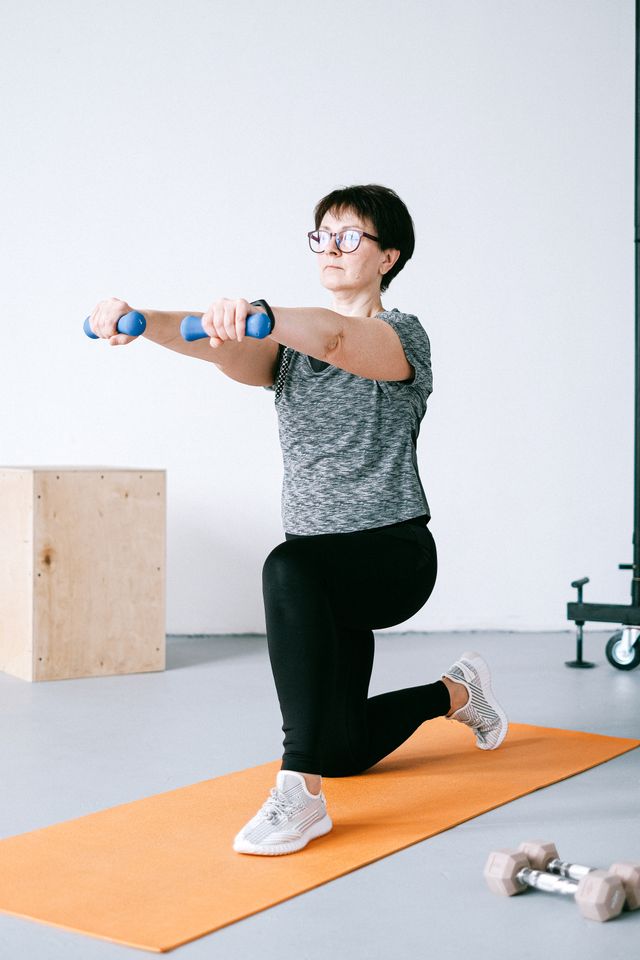
Exercise helps independently of weight change, with both aerobic activity and resistance training reducing liver fat. Cutting sugary drinks, especially those containing fructose, has an outsized effect. Coffee, oddly enough, has consistent observational associations with less fibrosis, though nobody would prescribe it as treatment.
No supplement has been shown to reverse fibrosis. Vitamin E and certain diabetes medicines have specific evidence in selected patients, but those are prescribing decisions for a specialist, not a pharmacy buy.
Where this fits#
Fatty liver is rarely a liver problem in isolation. It is usually the visible edge of insulin resistance, and treating that is what changes the outcome for the heart as well as the liver. The full guide to prediabetes and insulin resistance is the natural place to go next.
Sixty seconds of calm, right now
Box breathing: in 4, hold 4, out 4, hold 4. Follow the circle.
If you are buying a monitor
Get an upper-arm cuff, not a wrist one, from a validated brand like Omron. Expect $30 to $60. Check the cuff size fits your arm; a too-small cuff reads high.
Buying through this link supports the free library with a small commission. It never changes a pick.
Have your own result?
Send the report. A doctor explains every value in writing within 3 days.
Common questions
Is fatty liver serious?
Can I still drink alcohol?
Which foods reverse fatty liver?
People also ask
Not what you were looking for?
Say what you came for and we will take you there.