Erectile Dysfunction: Why It Is a Heart Question First
A doctor explains why erectile difficulty is often an early blood vessel signal, how to tell physical from psychological, and what helps.

See a doctor promptly if
- New erectile difficulty alongside chest tightness, breathlessness on exertion, or pain in the calves when walking
- Difficulty that began within weeks of starting a new prescription medicine
- An erection that is painful, or one lasting more than four hours, which is an emergency
- A penis that has developed a bend, a lump along the shaft, or pain on erection
- Erectile difficulty with numbness in the groin, trouble passing urine, or weakness in the legs
The short version
- An erection is a blood vessel event. The arteries involved are narrow, so they show damage earlier than the heart's arteries do, which is why new erectile difficulty in a man over 40 is worth a cardiovascular check rather than only a prescription.
- Gradual difficulty, absent morning erections and problems in every situation point to a physical cause. Sudden onset with normal morning erections points to a psychological or situational one.
- Diabetes, high blood pressure, smoking, sleep apnea and several common prescriptions are the usual physical drivers, and most of them are treatable.
- It is common, it is not a verdict on masculinity, and around three quarters of men improve with the right cause addressed.
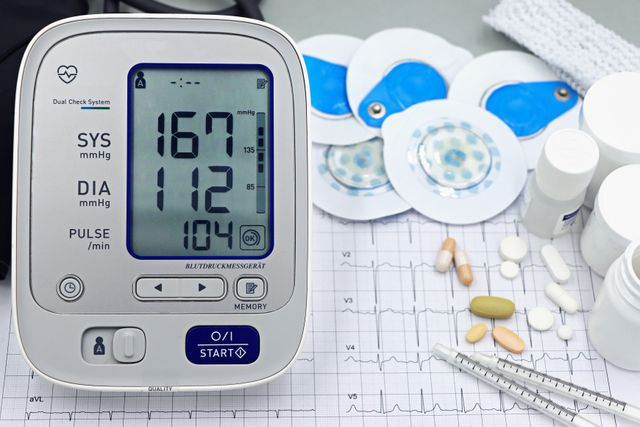
Check your blood pressure1 min, free, nothing to installThis is often the first sign of a blood vessel problem, which is why the first thing a doctor checks is a cuff, not a prescription.

An erection is a blood vessel event before it is anything else. Signals from the nervous system relax the muscle in the artery walls, blood flows in faster than it drains out, and pressure does the rest. Anything that stiffens or narrows arteries, damages the nerves that trigger them, or floods the system with adrenaline will interfere. That is the whole mechanism, and it is why this is a circulation topic rather than a bedroom one.
Why the timing matters#
The arteries supplying the penis are roughly one to two millimeters across. The coronary arteries feeding the heart are three to four. Atherosclerosis, the gradual furring of artery walls, happens throughout the body at a similar rate, but a given amount of narrowing chokes a small pipe long before it chokes a larger one.
The practical consequence is that erectile difficulty often shows up first. Studies following men over time have found it preceding a cardiac event by something like three to five years on average. That window is the useful part. A man who turns up at 52 with new erectile difficulty and leaves with a prescription and nothing else has been handed a symptom and had the warning thrown away.
Physical or psychological: how the difference shows#
Neither is more legitimate than the other, and plenty of men have both at once. But they behave differently, and the pattern usually tells you which is leading.
| Sign | Points to a physical cause | Points to a psychological cause |
|---|---|---|
| How it started | Gradually, over months or years | Suddenly, often traceable to a specific occasion |
| Morning erections | Faded or gone | Still happening |
| Alone versus with a partner | Difficult in both | Fine alone, difficult with a partner |
| Consistency | Every time | Varies with situation and partner |
| Other things going on | Diabetes, blood pressure, smoking, snoring | Stress, relationship strain, a new medicine for mood |
Morning erections are the single most useful question. They happen during REM sleep, without arousal, several times a night. If they are still occurring, the nerves and arteries are demonstrably capable of producing an erection, and the problem sits elsewhere.
The usual physical drivers#
Diabetes, above all. High blood sugar damages both the small arteries and the nerves that trigger them, and erectile difficulty is sometimes the first thing that brings a man in. In men with diabetes it arrives earlier and is harder to treat, which is an argument for finding the diabetes early rather than an argument for despair.
High blood pressure, both the condition and some of the medicines used for it. Long-standing raised pressure stiffens artery walls.
Smoking, which constricts vessels immediately and damages them permanently. Stopping improves matters measurably in men who have not yet done long-term damage.
Sleep apnea, which is common, under-diagnosed, and linked to erectile difficulty through both low overnight oxygen and low testosterone. Snoring plus daytime sleepiness plus erectile difficulty is a combination worth investigating as one problem.
Medicines. Several classes are implicated, listed in the questions above. The pattern to notice is difficulty that began within a few weeks of a new prescription.
Alcohol, in the short term and the long. A heavy evening does it acutely. Years of heavy drinking damages nerves and lowers testosterone.
Testosterone, in a minority. It usually arrives with reduced interest in sex, low energy and lost muscle, rather than as the only symptom.
What a doctor will check#
The workup is short and mostly about the rest of you.
- Blood pressure, in both arms if it has not been done recently
- HbA1c or fasting glucose, for diabetes and prediabetes
- A lipid panel
- Testosterone, taken in the morning, when the picture suggests it
- Thyroid function, sometimes
- A review of every medicine and supplement you take
- Questions about snoring and daytime sleepiness
What helps#
Treating the driver. This is the part that gets skipped and it is the part that changes the trajectory. Blood pressure controlled, blood sugar brought down, sleep apnea treated, a medicine swapped for an alternative in the same class.
Stopping smoking. The single highest-yield change for most men who smoke.
Exercise. Aerobic exercise has trial evidence here, not as a wellness gesture but through the same mechanism that helps the rest of the vascular system. Something in the region of forty minutes, three or four times a week, is where the studies sit.
Weight, if there is excess around the middle. Central fat lowers testosterone and worsens vessel function at the same time.
Oral medicines. The class most people have heard of works for a majority of men. Two things are worth knowing. They require arousal to do anything, so they are not a switch. And they must never be combined with nitrate medicines used for angina, because the drop in blood pressure can be dangerous. That is the reason to go through a doctor or pharmacist rather than an unverified website.
Psychological therapy. Where performance anxiety is driving the loop, it has real evidence, and it works faster than most men expect.
The one that is urgent#
An erection that will not go down, lasting more than four hours, is called priapism and it is an emergency. Blood trapped in the tissue stops carrying oxygen, and permanent damage begins within hours. It is uncommon, it is more likely with injected treatments and in men with sickle cell disease, and it needs an emergency department rather than a wait-and-see.
A penis that has developed a curve, a firm lump along the shaft, or pain on erection is Peyronie's disease, which is not an emergency but is worth seeing someone about early, because the options are better before the scar tissue matures.
The conversation men do not have#
Most men who bring this up have been sitting on it for a year or more. A common opening is to book about something else entirely and mention it while reaching for the door handle. That delay is the expensive part, because the years spent not asking are the years the underlying vascular process is quietly proceeding.
It is worth saying plainly that this is one of the most common things a doctor is asked about in middle age, that it is a circulation symptom rather than a character trait, and that the men who do best are the ones who came in early and let someone look at the whole picture rather than only the symptom.
If the tablets do not work#
Roughly a third of men get little benefit from the oral medicines, and a fair number of those were never given a proper trial. Before concluding they have failed, a doctor will usually check three things: whether you took it with a heavy meal, which slows absorption for some of them; whether there was actual sexual stimulation, since they do nothing without it; and whether you tried it enough times, because most guidance suggests several attempts before judging.
If a real trial has failed, there are further options and none of them are last resorts. A vacuum device draws blood in mechanically and holds it with a ring, works regardless of vessel health, and is the least invasive of the alternatives. Injected or urethral treatments act locally and work for many men in whom tablets do not, including after prostate surgery. A penile implant is a surgical option with high satisfaction rates in men who have exhausted the others.
The point of listing them is not to push anyone toward surgery. It is that "the tablets did not work" is a stopping point far too often, when it should be a referral.
What to bring to the appointment#
This is a short consultation if you arrive prepared, and a frustrating one if you do not.
- A full list of medicines and supplements, including anything bought online
- Roughly when it started, and whether it came on over months or after a specific occasion
- Whether morning erections still happen
- Whether it happens alone as well as with a partner
- Recent blood pressure, cholesterol and blood sugar results, if you have them
- Whether you snore, and whether you are sleepy during the day
- How much you drink in a typical week, honestly
The bottom line#
An erection depends on arteries, nerves and calm, and the arteries involved are narrow enough to complain first. New difficulty that came on gradually, with morning erections fading, is a physical signal and deserves a blood pressure, blood sugar and cholesterol check as much as a prescription. Sudden difficulty with morning erections intact is usually anxiety or situation, and it responds well. Most men improve when the actual driver is found. The one thing not to do is treat the symptom online without anyone knowing what else you take.
Should this go to a doctor?
Three honest answers, a plain answer back.
If you are buying a monitor
Get an upper-arm cuff, not a wrist one, from a validated brand like Omron. Expect $30 to $60. Check the cuff size fits your arm; a too-small cuff reads high.
Buying through this link supports the free library with a small commission. It never changes a pick.
Have your own result?
Send the report. A doctor explains every value in writing within 3 days.
Common questions
Is erectile dysfunction a sign of heart disease?
What do morning erections tell you?
Which medicines commonly cause it?
Does it mean my testosterone is low?
Is it permanent?
Do the tablets everyone knows about work for everyone?
Can anxiety alone cause it?
People also ask
Not what you were looking for?
Say what you came for and we will take you there.