What Does a Gallbladder Attack Feel Like?
A doctor explains what a gallbladder attack feels like, where the pain sits and spreads, why it follows fatty meals, and the signs that make it urgent.

See a doctor promptly if
- Gallbladder-type pain lasting more than five hours, or pain with fever and chills
- Yellowing of the skin or eyes, dark urine, or pale stools alongside the pain
- Severe upper belly pain with repeated vomiting that stops you keeping fluids down
- Pain boring straight through to the middle of the back, with a very unwell feeling
- Any doubt between gallbladder pain and heart pain, especially with sweating, breathlessness or arm or jaw pain
- Confusion, drowsiness, a fast heartbeat, or shaking chills with upper belly pain
The short version
- A gallbladder attack is a steady, severe ache under the right ribs or below the breastbone. It often spreads to the right shoulder blade.
- It usually starts one to three hours after a rich meal. Evenings and the small hours are the classic timing.
- A typical attack builds over an hour and fades within one to five hours. No position or antacid touches it.
- Pain past five hours, fever, yellow eyes or dark urine means it is no longer simple colic. Get same-day care.
Try the symptom diary10 seconds a day, free, nothing to installWhether this is the third time this year or the first changes what a doctor does next, and a dated list settles it in seconds.

People who have had one rarely forget it. A deep, hard ache under the right ribs arrives an hour or two after a rich dinner. It builds until no position helps, and ignores every antacid in the house. That is the shape of a gallbladder attack. Knowing that shape, and the handful of signs that upgrade it to urgent, is worth more than any single test.
What it feels like, and exactly where#
The pain is steady, not crampy. That surprises people, because the medical name is biliary colic, and colic suggests waves. It does not come and go in spasms. It arrives, climbs, and sits.
Most people describe it in the same few ways:
- A deep ache or pressure high in the right upper belly, under the rib margin.
- Or dead center under the breastbone, which is why it gets called indigestion.
- Spreading through to the right shoulder blade, or between the shoulder blades.
- Severe enough to stop conversation, pace the room, or curl up.
- With nausea, and often vomiting that brings no relief.
- Sweating and restlessness while it lasts.
Two negatives are as useful as the positives. Nothing you do changes it. Walking, lying still, sitting up, burping, passing gas and opening the bowels all leave it exactly where it was. And pressing on the spot does not reproduce it, unlike a pulled muscle or bruised rib.
Why it happens#
The gallbladder is a small bag under the liver holding about 50 mL (1.7 fl oz) of bile. Bile is made by the liver and used to digest fat.
When fat reaches the small intestine, a hormone signals the gallbladder to contract and squirt bile down a narrow tube. If a gallstone is sitting in the outlet, the gallbladder squeezes against a blocked door. The pressure inside rises, and that pressure is the pain.
When the stone falls back and the exit opens, the pressure drops and the pain fades. That is why a classic attack ends on its own. It also explains why the attack repeats: nothing has been removed, and the same stone is still there.
The timing that gives it away#
Attacks follow food, with a delay. One to three hours after a meal is typical, because that is how long fat takes to reach the intestine and trigger the squeeze.
The usual culprits are fried food, cheese, cream, pastry, a takeaway, or a large celebration meal. Some people have attacks after a normal meal that follows a day of fasting.
Night is the classic hour. Two reasons combine: the largest and richest meal of the day is usually the evening one, and lying flat lets stones roll toward the outlet. Being woken between midnight and 3am by this pain is a very common story.
How long an attack lasts, and why that matters#
Duration is the single most useful number you can give a doctor.
| How long the pain lasts | What it usually means | What to do |
|---|---|---|
| A few seconds to a few minutes | Rarely gallstones. Think gas, muscle or gut spasm | Mention it, no rush |
| 30 minutes to 5 hours, then gone | Typical biliary colic | Book an appointment and a scan |
| More than 5 hours, still severe | The gallbladder is likely inflamed, not just squeezing | Same-day medical care |
| Constant for days, with fever or yellowing | A blocked duct or infection | Emergency care |
The five hour mark is the practical dividing line. Beyond about five hours, the assumption changes from a squeezing gallbladder to an inflamed one. That is a hospital problem, not a clinic one.
Telling it apart from the things it imitates#
| Condition | How the pain behaves | The tell |
|---|---|---|
| Gallbladder attack | Steady severe ache, right upper belly or center, 1 to 5 hours | Follows fatty food, spreads to right shoulder blade, antacids do nothing |
| Acid reflux | Burning rising behind the breastbone | Worse lying flat and bending, eases with antacids, sour taste |
| Stomach ulcer | Gnawing or hungry pain, upper middle belly | Often eases or worsens with food, wakes in the early hours, weeks of on and off |
| Heart problem | Pressure or tightness, center or left chest | Sweating, breathlessness, spread to jaw or left arm, brought on by exertion |
| Pancreatitis | Severe pain boring straight through to the back | Person looks very unwell, relief leaning forward, persistent vomiting |
| Rib or muscle strain | Sharp, localized | Worse on pressing, twisting or coughing |
Our guide to acid reflux and bloating covers the burning version in detail.
The overlap that matters most is the heart. A heart attack affecting the lower surface of the heart can imitate gallbladder pain almost exactly. Gallbladder pain can bring sweating and nausea that imitate the heart. The safe order is heart first, gallbladder second. That applies over 40, and with diabetes, high blood pressure, high cholesterol or a family history.
Who gets gallstones#
Gallstones are common. Many people carry them for life and never know.
Higher chance if you are:
- Female. Estrogen increases cholesterol in bile, and pregnancy slows gallbladder emptying.
- Over 40, with the rate climbing each decade.
- Carrying extra weight, particularly around the middle.
- Losing weight fast, more than about 3 lb (1.4 kg) a week, or after weight loss surgery.
- On estrogen containing hormone therapy or contraception.
- Living with diabetes, or with high triglycerides.
- Related to someone with gallstones. Family history is a real risk factor.
- Living with Crohn's disease, cirrhosis, or a condition that breaks down red cells quickly.
Long fasting periods also matter. A gallbladder that is never asked to empty concentrates its bile and forms sludge.
What a doctor does next#
The visit is usually straightforward.
The examination. The doctor presses under your right ribs while you breathe in. Catching your breath from pain at that moment points toward an inflamed gallbladder. They check for fever, yellow eyes, and tenderness elsewhere.
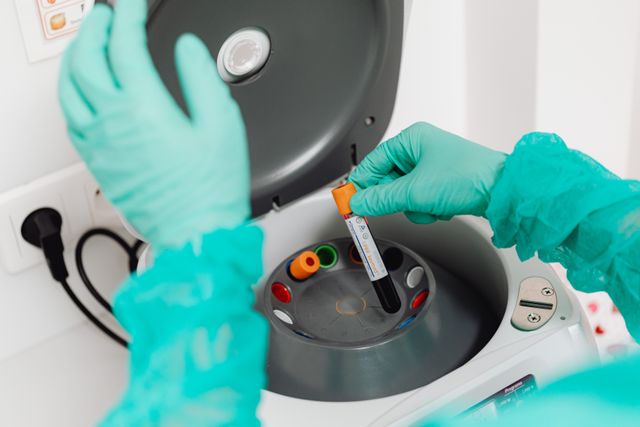
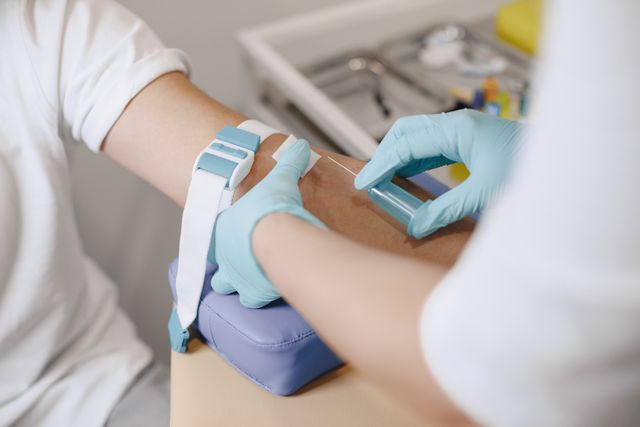
Blood tests. A full blood count for signs of infection, liver tests including bilirubin and ALP for bile flow, and lipase or amylase for the pancreas. Our guides to bilirubin and liver enzymes explain what those numbers mean. An ECG is added when heart pain is on the list.
Ultrasound. This is the main test. It is quick, painless, uses no radiation, and shows stones, sludge, and a thickened gallbladder wall. You are usually asked not to eat for several hours beforehand so the gallbladder is full. Our guide to reading an ultrasound report covers the wording.
When the ultrasound is not enough. An MRI scan of the bile ducts looks for a stone that has moved out of the gallbladder. A nuclear medicine scan measures how well the gallbladder empties when stones are not found. CT is used mainly to look for complications.
What the pain cannot tell you#
The attack tells you a lot. It cannot tell you everything, and this is where people go wrong.
Pain severity does not track with danger. A brutal three hour attack that settles fully is usually simple colic. A milder, duller pain that never quite goes can be an inflamed gallbladder.
The pain cannot tell you whether stones are present. Attacks happen with normal scans, and stones sit silently in millions of people. It cannot tell you the stone size either. Small stones are more likely to escape into the duct and cause the worse problems.
Most importantly, the pain cannot separate itself from the heart. Location and character overlap too much. That judgment needs an ECG, not a description.
What happens if it is left#
A first attack is a warning, not a one-off. Most people who have had one have another within a year or two.
Left alone, the possible next steps are:
- Repeated attacks. The commonest outcome. Painful, unpredictable, and disruptive to work and travel.
- An inflamed gallbladder. The stone stays stuck, the wall inflames, and the pain no longer stops. This brings fever and needs hospital care.
- A blocked bile duct. A stone escapes into the main duct. Bile backs up, causing yellow skin and eyes, dark urine and pale stools.
- An infected bile duct. Blocked bile becomes infected. Fever with shaking chills, yellowing and pain together is a medical emergency.
- Pancreatitis. A stone blocks the shared drainage point and inflames the pancreas. Severe pain through to the back, vomiting, and a very unwell person.
- Long term damage. Decades of stones and inflammation raise the risk of gallbladder cancer, which is rare but a reason not to ignore repeated attacks.
The conversation about surgery#
Recurrent attacks usually end in a discussion about removing the gallbladder. It is a common planned operation, done through keyhole cuts, with most people home within a day.
You can live normally without a gallbladder. Bile simply drips continuously from the liver into the gut instead of being stored. A minority of people get looser stools for a few months, which usually settles.
Between now and that appointment, smaller and less fatty meals reduce how hard the gallbladder has to squeeze. Do not fast for long periods, since that promotes sludge. Keep a note of each episode, the meal before it, and how long it lasted. Our free symptom diary does that neatly, and it is the history a surgeon wants.
What I see most often in clinic#
Three patterns repeat.
The first is months of attacks treated as indigestion. Antacids do nothing, which was the clue all along, and the diagnosis waits for the attack that finally lands in an emergency department.
The second is the person who is sure it cannot be gallstones because they are slim and young. Both happen. Family history and rapid weight loss matter more than build.
The third is the attack that lasted seven hours and was slept off. That is the one I would rather see the same day. Duration is the number that changes the plan.
I also see the reverse worry. People with one short attack and a normal scan fear something is missed. Usually nothing is. Sludge and small stones are the usual answer.
When to see a doctor#
Book an appointment for any of these:
- One clear attack of severe upper belly pain lasting more than 30 minutes.
- Repeated pain under the right ribs after fatty meals.
- Pain that spreads to the right shoulder blade.
- Ongoing nausea, bloating and fat intolerance with upper belly discomfort.
Get same-day care for pain beyond five hours, fever or chills, or yellow skin and eyes. The same goes for dark urine, pale stools, or vomiting that stops fluids going down.
Call emergency services for severe upper belly or chest pain with sweating, breathlessness, or pain spreading to the jaw or left arm. Treat that as the heart until it is proven otherwise.
Unsure whether what you felt was any of this? Ask a doctor and describe it plainly, including how long it lasted.
The bottom line#
A gallbladder attack is a steady, severe ache high in the right upper belly or under the breastbone. It often spreads to the right shoulder blade, and arrives one to three hours after a fatty meal.
It builds over an hour, holds, and fades within one to five hours, and nothing you do changes it while it lasts. Past five hours, or with fever, yellowing or dark urine, it stops being simple colic and needs same-day care. One clear attack earns an ultrasound, because stones that have spoken once tend to speak again.
Should this go to a doctor?
Three honest answers, a plain answer back.
For reflux at night
Raising the chest on a wedge works with gravity where stacked pillows fail. Doctors suggest it before adding more medicine.
Buying through this link supports the free library with a small commission. It never changes a pick.
A question about your own situation?
One question, answered personally by a doctor in writing within 24 hours.
Common questions
Where exactly is gallbladder pain felt?
How long does a gallbladder attack last?
Why do attacks happen after fatty food and at night?
How do I tell a gallbladder attack from heartburn or a heart attack?
Can you have a gallbladder attack without gallstones?
What does a scan show for gallstones?
Can gallstones go away on their own?
People also ask
Not what you were looking for?
Say what you came for and we will take you there.