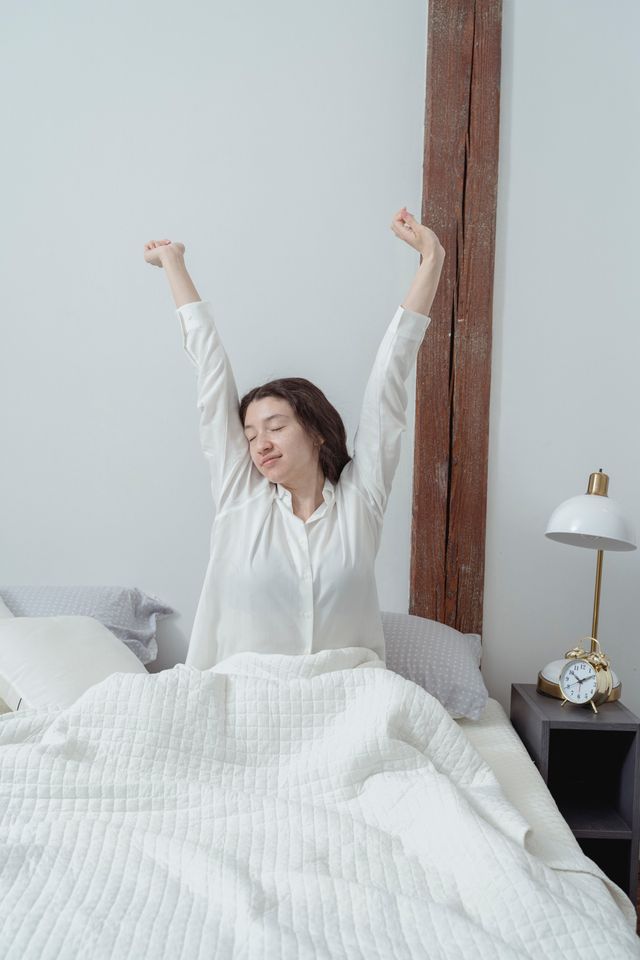
How Much Sleep Do Adults Actually Need?
A doctor explains the seven to nine hour guidance for adults, why the number is a range rather than a target, and how to work out what you personally need.

See a doctor promptly if
- Falling asleep while driving, operating machinery, or during conversations
- Loud snoring with pauses in breathing, or waking gasping or choking
- Sleeping nine hours or more and still waking unrefreshed for weeks, especially with low mood or weight change
The short version
- Adults are advised to get seven to nine hours a night. Treat seven as the floor for most people, not a comfortable average.
- The reliable test is not the number on a tracker. It is the day that follows. You wake up fairly restored, and you are not fighting sleep in quiet moments.
- Real short sleepers who do well on six hours exist, but they are rare. Most people who claim to be one are simply used to being tired.
Check your sleep2 min, free, nothing to install

Adults are advised to get seven to nine hours of sleep a night, and seven is best read as a floor rather than a comfortable average. Consistently sleeping under that is associated in large population studies with higher rates of high blood pressure, type 2 diabetes, obesity, depression and road accidents.
Why it is a range and not a number#
Sleep need is distributed like height. Most adults cluster in the middle, a minority really do well on a little less, and a minority need more than nine hours to function. Guidelines give a range because prescribing a single figure would be wrong for a large share of the population.
The complication is that people are poor judges of their own sleep need. In laboratory studies, volunteers restricted to around six hours a night show steadily worsening attention and reaction times across two weeks, while their own ratings of sleepiness plateau after a few days. You adapt to feeling tired long before your brain adapts to being short of sleep. That gap is why so many people believe they are fine on five or six hours.
How to work out your own number#
Two practical tests, neither requiring a device.
The first is the holiday test. On a stretch of days with no alarm and no obligation, after the first two or three catch-up nights, note when you naturally fall asleep and wake. That settling point is a reasonable estimate of your requirement.
The second is the daytime test. If you regularly fight sleep during passive moments, a long meeting, a bus ride, the early evening, you are probably underslept, whatever the number says. Someone who is sleeping enough can be bored without being overwhelmed by sleepiness.
Quality counts as well as quantity#
Eight hours in bed is not eight hours of sleep. Time awake, brief arousals from snoring or reflux, alcohol fragmenting the second half of the night, and a bladder waking you twice all reduce what you actually get. Someone who spends nine hours in bed and still wakes exhausted usually has a quality problem, not a quantity problem, and sleep apnea is the single most often missed cause of that pattern.
Sleeping much more than nine hours regularly and still feeling unrefreshed also deserves attention rather than reassurance, because it can accompany depression, thyroid disease, anemia and untreated breathing disorders.
Consistency matters more than most people expect#
A steady wake time is the strongest single anchor for the body clock, and it does more for daytime alertness than a perfect bedtime routine. Wildly variable schedules produce something close to a permanent mild jet lag, which is one reason shift workers report so much fatigue even when their total sleep hours look enough.
Where to take this next#
If you are giving sleep the hours and still not getting it, that is insomnia rather than a scheduling problem, and the fuller guide to fixing sleep sets out the treatment that actually works for it.
Give your sleep a quick check
Three answers, honest ones.
Before you buy anything for sleep
No gadget fixes sleep apnea. But if your score above suggests a sleep study, a simple pulse oximeter can give your doctor useful overnight numbers for under $30.
Buying through this link supports the free library with a small commission. It never changes a pick.
A question about your own situation?
One question, answered personally by a doctor in writing within 24 hours.
Common questions
Is six hours enough if I feel fine on it?
Can I catch up at the weekend?
Does sleep need change with age?
People also ask
Not what you were looking for?
Say what you came for and we will take you there.